Last updated 2026-08-20
TL;DR
Arkansas has no dedicated lavender farm license. File with the Secretary of State if you form an LLC, get a DFA sales tax permit once you sell, and ask the Plant Board before you sell live plants. Budget 2-3 years to a real harvest. Drainage beats variety catalogs. Confirm current fees with each board.
Do you need a license for a lavender farm in Arkansas?
No. Arkansas issues no special lavender farm license. Growing lavender for dried stems, u-pick, or oil is farming, not a named license class. You may still need ordinary business paper, a sales tax permit once you sell, and a nursery credential if you sell live plants. County zoning can stop you before any state form does.
That is the whole plot. People hunt for a lavender permit because a few other states have louder agritourism rules. Arkansas is quieter. The Secretary of State handles entities. The Department of Finance and Administration handles sales and use tax permits. The State Plant Board inside the Arkansas Department of Agriculture handles nursery stock if you sell plants. None of those offices runs a lavender program.
Grow only for your own wreaths and never sell, and you may need nothing at the state level. Once money changes hands, the picture changes. A roadside bunch stand is a retail sale. A u-pick Saturday is a retail sale plus visitors on your land. Selling potted lavender is nursery work. Selling lavender cookies can pull in the health department.
I would not start by paying a consultant to get you licensed. Call the county planning office first, then file the cheap state paper, then ask Plant Industries a direct question: are we a nursery if we only sell cut stems? Cut flowers often get treated differently from rooted plants. Confirm that with them. Do not take a web article as a ruling.
For the license stack in more detail, use lavender farm license in Arkansas. A similar humid-South start path is how to start a lavender farm in Alabama.
How much does a lavender farm cost in Arkansas?
A small planted acre in Arkansas often lands between $8,000 and $25,000 before land, with land on top. The spread is ugly because drainage work, plant size, and whether you build u-pick parking dominate the bill. Nobody publishes a solid Arkansas lavender enterprise budget. The closest honest anchors are USDA land values and plant counts you can actually order.
USDA NASS reported Arkansas farm real estate averaging $3,540 per acre in 2023. [2] That figure mixes Delta cropland, pasture, and buildings. A five-acre gravelly ridge near weekend traffic will not sell at the statewide farm average. A wet bottom might. I would pay more for a slope that sheds water than for cheap clay.
USDA NASS put the national picture this way in Land Values 2023: "The United States farm real estate value, a measurement of the value of all land and buildings on farms, averaged $4,080 per acre for 2023, up $280 per acre (7.4 percent) from 2022." [2] Arkansas sat below that U.S. average.
Plants are the other hard number. A common field density runs roughly 2,000 to 3,000 plants per acre, depending on variety and row spacing. Plugs might run a few dollars each. Gallon plants cost more and establish faster. Do the multiplication before you fall in love with a French catalog. A 1-acre planting can be about $6,000 in liners or well over $20,000 in finished gallons.
Irrigation, fabric or mulch, and raised beds or gravel on Arkansas clay can match the plant bill. A still for essential oil is a waste of money in year one if you do not yet have biomass. A working bathroom and a legal parking pad matter more than a still if your plan is u-pick. Paper is the cheap part. Entity filing and a sales tax permit are small next to plants. Confirm current SOS and DFA amounts on their fee pages. Do not budget a made-up license package.
| Cost piece | Honest range | What moves it |
|---|---|---|
| Land (USDA 2023 farm real estate average) | $3,540 per acre statewide | Location, drainage, road frontage [2] |
| Plants per planted acre | $6,000 to $24,000 | Density, plugs vs gallons |
| Site prep, drip, drainage | $2,000 to $8,000+ per acre | Clay and slope |
| U-pick extras (parking, paths, shade) | $1,000 to $15,000+ | County parking rules |
| State filings | low hundreds if you stay simple | Confirm SOS and DFA current fees |
If you want a drier-climate cost picture, how to start a lavender farm in Colorado and how to start a lavender farm in Arizona show what changes when rain is not the enemy.
How long does a lavender farm take in Arkansas?
Plan on 2 to 3 growing seasons before you have a harvest worth advertising. Paper can move in days once an office accepts a clean filing. Plants are slower than forms. I will not promise you an approval date. Confirm processing with each board.
Year 0 is land, soil tests, and drainage. University of Arkansas System Division of Agriculture soil testing is the right first lab, not a garden-center kit. [4] Lavender wants higher pH and sharp drainage. A lot of Arkansas ground gives you the opposite.
Year 1 is planting, drip, and keeping roots out of standing water. You may get a few bloom spikes. I would not book wedding photography on that. Year 2 is the first real cut for many cultivars, still light. Year 3 is when a healthy stand starts to look like the photos people copy from the Pacific Northwest. Wet winters can reset that clock by killing plants.
County zoning, driveway permits, and parking rules are the slow surprises. A nursery credential, if you need one, follows Plant Board process. Confirm that timeline with Plant Industries. A lavender planting can last 8 to 10 years on a good site, shorter here if root rot shows up. Budget replacements.
What land and climate work for lavender in Arkansas?
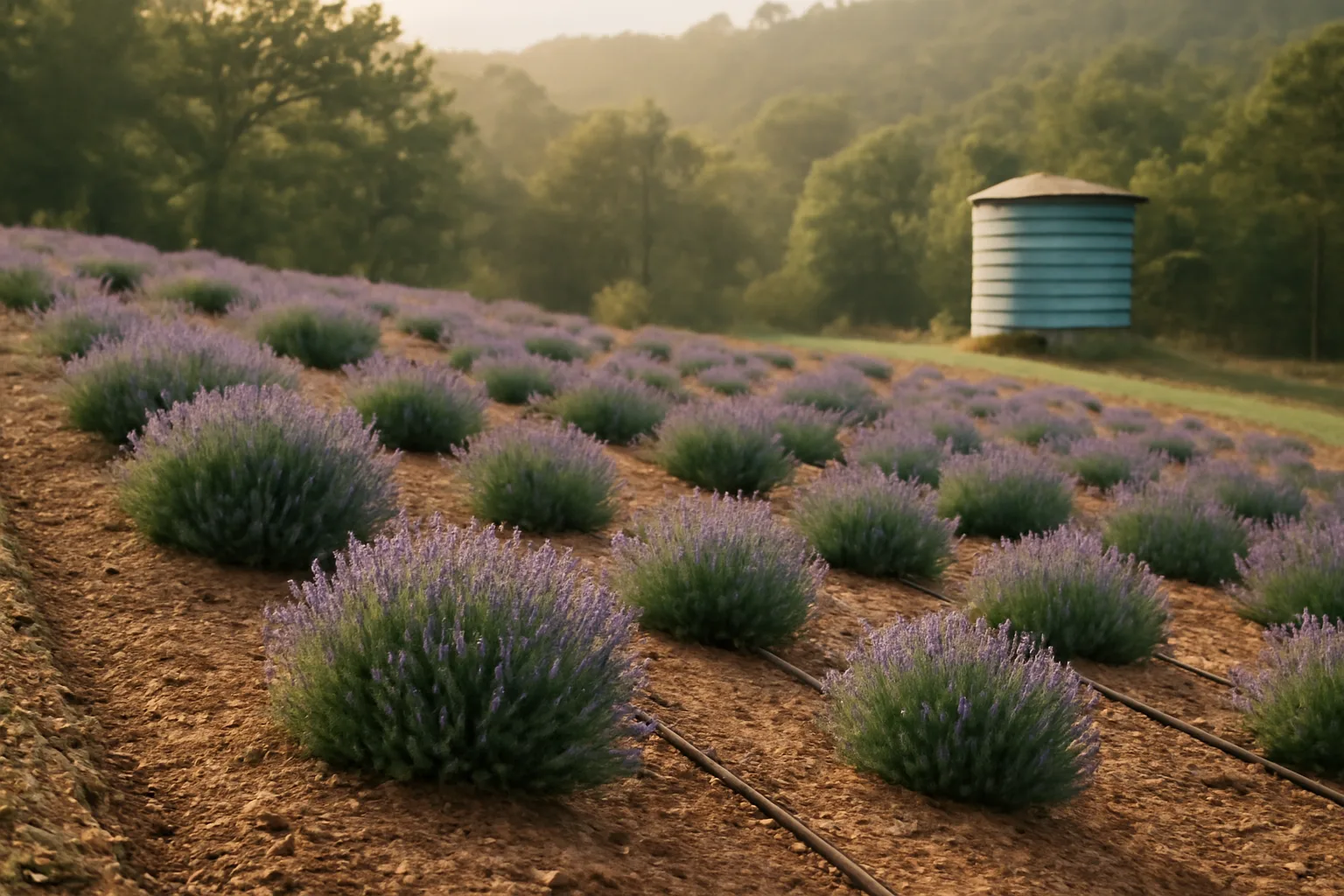
Lavender fails in Arkansas more from water than from cold. The USDA Plant Hardiness Zone Map puts Arkansas roughly in zones 6b through 8a, warm enough for many Lavandula cultivars. [3] Hardiness is not the constraint. Rain is.
NOAA climate monitoring puts Arkansas statewide precipitation on the order of 50 inches a year. [9] Lavender evolved in summer-dry, gravelly places. You are asking it to live in a humid, high-rainfall state with clay and, in spots, a high winter water table. That is a site problem you solve with physics, not with a prettier cultivar name.
I would look at northwest Arkansas slopes, rocky Ozark ground, and anything that sheds water after a three-inch night. I would walk away from flat Delta fields unless I was ready to build raised beds, gravel, and serious ditches. Full sun. Air flow. No irrigation that puddles.
Get a soil test. [4] If pH is low, lime. If the sample is heavy clay, plan beds. If water stands in February, pick another crop. The 2022 Census of Agriculture counted 37,912 farms in Arkansas, with an average size of 357 acres. [1] You do not need 357 acres. A well-drained 1 to 3 acres near a weekend population will out-earn 40 wet acres on a county road nobody drives.
California's industry sits in a different climate. How to start a lavender farm in California is useful as a contrast, not a template.
What business filings should you do first?
Call planning and zoning in the county where the plants will live. Then decide whether you want an LLC. Then get the tax permit if you will sell. Arkansas uses no statewide general business license for farms. Cities and some counties still issue privilege licenses or similar local paper. Ask the city clerk if the farm sits inside city limits. Rural land is not automatically exempt from parking, sign, and special-event rules once you invite the public.
Form a domestic LLC and you file with the Arkansas Secretary of State Business and Commercial Services unit. Fees live on the current SOS forms and fees materials. Confirm the number before you write the check. [13] Registering an entity does not make you a farm for USDA programs. That is a separate FSA conversation.
Sell tangible goods, including cut bunches and bottles, and you generally need an Arkansas sales and use tax permit from the Department of Finance and Administration. File through the state's tax system and confirm current requirements on DFA's sales and use tax pages. [14] Decorative stems are not a grocery exemption just because they grew in dirt.
I would not buy a trademark or a fancy operating agreement in month one. I would spend that money on gravel and a soil test.
Do you need a nursery license to sell lavender plants?
Sell rooted lavender and you should treat it as nursery stock until the Plant Board tells you otherwise. Arkansas regulates the sale of nursery stock through the State Plant Board under the Department of Agriculture. Cut stems and dried bunches usually fall in a different category from live plants. Potted plants, plugs, and liners are the trigger.
I cannot quote you a current nursery fee because those schedules change and I will not invent one. Call Plant Industries, ask for the nursery dealer or grower application, and confirm the fee and inspection practice. If you only do u-pick of blooms and never lift a plant with roots, say that clearly on the call.
Shipping plants across state lines adds phytosanitary questions. Do not mail plants because a Facebook group said it was fine. Alabama's nursery paper is a useful comparison if you sell in both states. See lavender farm license in Alabama.
Can you sell oil, dried bunches, and u-pick tickets?
Dried bunches and u-pick admissions are the simple products. Essential oil and anything you call a cosmetic or a food is where people get sloppy. FDA's own guidance is blunt: "Cosmetic products and ingredients, with the exception of color additives, do not need FDA premarket approval." [7] That is not a free pass. You still cannot sell adulterated or misbranded cosmetics, and labeling rules still apply if you put lavender oil in a bottle and claim it treats disease. Disease claims pull you toward drug territory.
I would sell lavender essential oil as a scent product, skip the medical stories, and read the FDA cosmetics pages before the first online listing. [7] Distillation itself is farm processing. Selling the oil is commerce. Keep those two ideas apart.
Food is separate. A lavender lemonade stand or bakery item can trigger Arkansas Department of Health rules. Cottage-food allowances exist with limits on products, venues, and labels. Confirm the current Arkansas health rules for your exact product. Do not assume a farm stand is automatically a cottage-food venue.
U-pick tickets are admissions plus agriculture. Your bigger risk is a guest who falls in a hole, not a missing oil permit. Liability insurance belongs in this paragraph more than a still does. If you later want a heavier paper state for comparison, lavender farm license in California shows how loud the forms can get.
What varieties and planting density should you use?
I would not plant a full acre of English lavender (Lavandula angustifolia) on a humid Arkansas flat and hope. Southern growers often have better luck with tougher lavandins (L. x intermedia) and with cultivars already sold as heat-tolerant, and they still lose plants in a wet winter. Trial 50 to 100 plants of two or three cultivars before you write a 3,000-plant check. ATTRA's lavender production guide is a decent national overview of products and u-pick as a market path. It is not an Arkansas weather model. [6]
Density is a trade. Tighter spacing looks better for u-pick photos in year two. Wider spacing dries faster after rain. Many commercial rows run about 3 to 4 feet between plants and 4 to 6 feet between rows. That math gets you to roughly 2,000 to 3,000 plants per acre. Walk a tape on your actual beds. Do not copy a Washington State spacing sheet onto Arkansas clay without leaving air.
Buy from a nursery that will tell you the botanical name, more than "French lavender." Ask about root-rot history. Plant on mounds. Mulch with gravel if you can stand the look. Bark mulch holds water against the stems. That is a nice way to kill a stand. Seed is a waste for a commercial timeline. Seedlings are variable and slow. Start with plants.
If you want a single first-year checklist that covers cultivar choice, a simple distill path, and u-pick flow, LavenderKit's $149 one-time Cultivar + Distill + U-Pick Kit is at /start. It is optional paper. The drainage work still comes first.
What first-year equipment is worth the money?
Buy a soil test, tractor time or a tiller for beds, drip irrigation, and a way to knock down weeds without stripping the soil. That is the useful list. Skip the copper still in year one unless you already know oil is the business. You will not have enough flower. A gift shop can wait until you have something to sell besides hope.
A backpack sprayer only matters if you have a labeled product and, for restricted-use pesticides, an applicator credential. Most small lavender farms in year one should be weeding, not spraying. If you hire people and use pesticides, the EPA Agricultural Worker Protection Standard can apply. [11] Read it before you treat this like a hobby garden with employees.
NRCS Environmental Quality Incentives Program (EQIP) sometimes helps with irrigation or erosion practices. [10] It is not a lavender grant. Eligibility runs through USDA, and you need a farm number first. EQIP takes time. Do not count on cost-share to fund this spring's drip. I would rent a trencher for a day rather than buy one.
How do farm taxes and USDA farm numbers work?
A USDA farm number does not come from the Arkansas Secretary of State. You work with FSA. farmers.gov explains that a farm number is what you need to apply for many USDA programs. [5] Get it if you want EQIP, crop insurance conversations, or other USDA doors. Skip it if you are only selling a few bunches and want no federal programs.
IRS Schedule F is how farm income and expenses get reported on Form 1040. [8] Profit motive matters. A 50-plant backyard with no sales is not a farm because you want a nicer tax story. Keep receipts. If you never sell, you do not magically get farm treatment.
Property tax is a county assessor question. Some land already carries agricultural use status. Converting a residential lot to farm for taxes is not automatic because you planted lavender. Ask the assessor. I have seen people waste a year on this.
Organic claims require USDA National Organic Program certification if you sell as organic, with only narrow exemptions for very small operations. [12] You can farm without the seal. I would not chase organic in year one on a crop that is already hard to keep alive in this humidity.
What insurance do you need for a u-pick lavender farm?
If strangers walk your rows, you need liability insurance written for that. Homeowner policies often exclude business and agritourism. Ask a farm agent for agritourism or u-pick coverage and get the exclusion list in writing. I am not quoting a premium because it varies by acreage, sales, and whether you serve food. Budget it as a real line, not a surprise.
Hire employees and workers' compensation and wage rules show up. Family-only labor still deserves a conversation with your agent and, if you pay wages, with labor rules. Do not guess. Parking along a state highway is how u-pick days go wrong. County road departments care. So does your insurer after the first near-miss.
Heat, holes, and bee stings are the ordinary injuries. Put water out. Have a phone. None of that is a statute. It is how you stay in business after the first Saturday in June.
What would I actually do in the first 12 months?
Month 1: walk the land after a hard rain. If it ponds, you do not have a lavender farm. You have a hole. Soil test through the University of Arkansas Division of Agriculture. [4] Talk to zoning. Month 2: entity if you want one, DFA permit if you will sell this year, insurance quotes. Order a small plant trial, not a full acre.
Months 3-4: build beds, drip, gravel. Plant in spring on a forecast that is not a flood. Summer: weed. Do not overwater. Kill sick plants instead of nursing fungus through the whole bed. Fall: note what lived. Take photos for next year's u-pick page only if it does not look sad. Winter: paper for next year, including FSA if you want USDA programs. [5] Replant gaps.
I would start under one planted acre. The 2022 Census average Arkansas farm is 357 acres, a row-crop number, not a herb number. [1] You can lose less money at half an acre while you learn where water sits.
If you also want the paper path for a similar humid state, keep how to start a lavender farm in Alabama open. For the Arkansas license list alone, use lavender farm license in Arkansas. This article is a reference, not legal advice. LavenderKit is an independent publisher, not a law firm and not a service company. The $149 Cultivar + Distill + U-Pick Kit is at /start if you want that binder.
Frequently asked questions
Do you need a license for lavender farm in Arkansas?
No special lavender farm license exists. You may need an SOS entity filing, a DFA sales tax permit if you sell, local privilege paper inside a city, and a Plant Board nursery credential if you sell rooted plants. Zoning is the filter that actually stops farms. Confirm each current fee and form with the agency. Nobody can promise you an approval clock.
How much does lavender farm cost in Arkansas?
Planted acres often run $8,000 to $25,000 before land, then land on top. USDA NASS put Arkansas farm real estate at $3,540 per acre in 2023, a statewide mix that will not match a small roadside tract. Plants at 2,000 to 3,000 per acre dominate if you buy gallons. Drainage on clay can rival the plant bill. Confirm filing fees with SOS and DFA.
How long does lavender farm take in Arkansas?
Forms can be short. The crop is not. Expect 2-3 growing seasons before a harvest you should advertise. Year 1 is establishment. Year 2 is a light cut on a healthy stand. Wet winters can kill plants and reset the clock. County zoning and driveway permits often take longer than state entity filings. Confirm processing times with each office.
Can you grow English lavender in Arkansas humidity?
You can try. Many stands fail from wet roots, not from winter cold. USDA hardiness zones 6b to 8a are warm enough. Annual rainfall near 50 inches is the real fight. I would trial lavandins and a couple of heat-tolerant cultivars on mounds, then expand only what survives a wet February. A full acre of English lavender on flat clay is how people lose a year of money.
Do you need a sales tax permit to sell bunches at the farm?
If you sell tangible goods in Arkansas, you generally need a DFA sales and use tax permit. Cut bunches, bottles, and most gift items count. File through the state tax system and confirm current rules on DFA's sales and use tax pages. A farm location does not by itself erase sales tax. Keep the permit question separate from USDA farm status.
Is organic certification required to start a lavender farm in Arkansas?
No. You can grow and sell lavender without the USDA organic seal. If you want to label the crop organic, you go through the National Organic Program, with only narrow exemptions for very small operations. I would not chase certification in year one while you are still learning which plants live through an Arkansas winter.
Can you distill lavender oil on the farm?
Distilling on your own land is farm processing. Selling the oil is cosmetics-style commerce under FDA rules, not a special Arkansas lavender permit. FDA does not premarket-approve most cosmetics, but you still cannot sell adulterated or misbranded products, and disease claims are a problem. A still in year one is usually a waste because you lack biomass.
Does a backyard plot count as a farm for taxes?
more than because you planted lavender. IRS Schedule F is for farm income and expenses, and a profit motive matters. County agricultural use valuation is an assessor question, not a plant count. A USDA farm number comes from FSA and is for USDA programs. Three different doors. Ask each office about your facts instead of copying a forum post.
What county permits hit a u-pick lavender farm?
Zoning, parking, signs, driveways, and sometimes special-event rules. Arkansas has no statewide agritourism stamp that overrides the county. If you are inside city limits, ask about privilege licenses. The public on your land is the change that pulls in insurance and local paper. Call planning before you buy 3,000 plants.
Should you buy plants or start from seed?
Buy plants. Seed is slow and variable, a bad match for a 2-3 year commercial clock. Order a 50 to 100 plant trial of named cultivars, then scale what lives. Ask the vendor for botanical names and root-rot history. Plugs cost less per plant. Gallons cost more and usually establish faster.
How many acres do you need to start a lavender farm in Arkansas?
Less than you think if the ground drains. The 2022 Census average Arkansas farm is 357 acres, which is not a herb figure. I would start under one planted acre, often at half an acre, near people who will actually drive out. Ten wet acres will not beat two dry acres with parking and a county that allows visitors.
Will the Plant Board inspect your lavender field?
If you are licensed as a nursery because you sell rooted plants, inspections follow Plant Board nursery rules. Confirm the current practice with Plant Industries. A cut-flower or u-pick-only operation may never see that inspection. Selling plants out of state can add phytosanitary paperwork. Ask before you advertise liners.
Sources
- USDA NASS, 2022 Census of Agriculture Arkansas Table 1: Arkansas had 37,912 farms in 2022 with an average farm size of 357 acres.
- USDA Agricultural Research Service, Plant Hardiness Zone Map: Arkansas falls roughly in USDA plant hardiness zones 6b through 8a.
- University of Arkansas System Division of Agriculture, Soil Testing: UAEX provides soil testing for Arkansas growers through the Division of Agriculture lab system.
- ATTRA / NCAT, Lavender Production, Products, Markets, and Entertainment Farms: ATTRA publishes a national lavender production and market overview including u-pick and value-added products.
- U.S. FDA, Cosmetics Overview / Is It a Cosmetic, a Drug, or Both?: Cosmetic products and ingredients, except color additives, do not need FDA premarket approval, but adulterated or misbranded cosmetics remain illegal.
- IRS, About Schedule F (Form 1040): Schedule F (Form 1040) is used to report farm income and expenses.
- NOAA NCEI, Climate at a Glance statewide precipitation: NOAA statewide precipitation records show Arkansas as a high-rainfall state, on the order of 50 inches a year.
- U.S. EPA, Agricultural Worker Protection Standard: The EPA Worker Protection Standard can apply when agricultural employers use pesticides and have workers or handlers.
- USDA AMS, Organic Certification: Selling products as organic generally requires USDA National Organic Program certification.
- Arkansas Secretary of State, Business and Commercial Services forms and fees: Domestic business entities such as LLCs are filed with the Arkansas Secretary of State; current fees are posted on SOS forms and fees materials.
- Arkansas Department of Finance and Administration, Sales and Use Tax: Retail sellers in Arkansas obtain sales and use tax permits through DFA and must confirm current registration rules there.