Last updated 2026-08-18
TL;DR
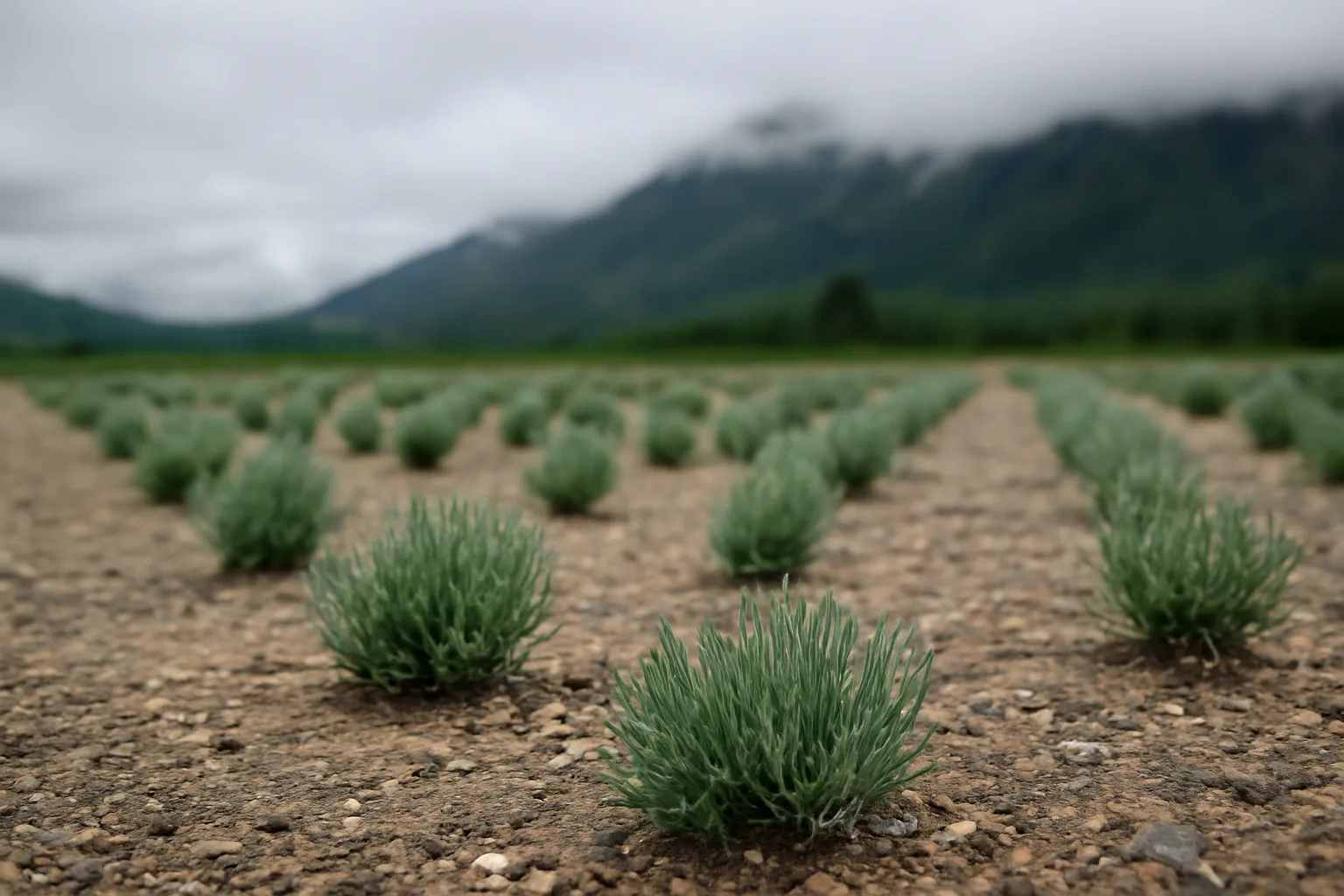
Alaska does not issue a lavender-specific farm license. You need a one-year Alaska business license if you sell, a borough business license where required, and cold-hardy cultivars like Munstead or Phenomenal. For a small trial planting, budget roughly $3,000 to $15,000. Your first usable harvest is usually year 2 or 3, with full production around year 5. Confirm local zoning and sales tax first.
Do you need a license to start a lavender farm in Alaska?
No. Alaska has no state license that says lavender farm. The paper path starts with the same Alaska business license any seller needs [1]. Sell two bundles at a market, and Alaska treats you as a business.
Alaska law requires every business to have an Alaska business license [1]. The one-year fee has been $50 in the state licensing system. Check the Division of Corporations, Business and Professional Licensing fee page before you file, because the fee can change [1].
Your borough or city may also require a local business license. Anchorage, Fairbanks North Star Borough, and Matanuska-Susitna Borough each have a municipal clerk or finance office that issues a separate local license. One state license does not cover local markets. Call the borough clerk before you plant.
Live plant sales are the one place where Alaska's Division of Agriculture might require a nursery license or plant material inspection. If you root your own plugs and sell them, call the Division of Agriculture and describe exactly what you plan to sell. The answer varies by borough and by what you call nursery stock.
The full Alaska paper path, including where to file and what to ask, is in the Alaska license guide.
How much does a lavender farm cost in Alaska?
$3,000 to $15,000 for a rational trial plot, not a full commercial farm. The low end means 100 plugs, bare ground, row cover, and a used walk-behind tiller. The high end means a 30 by 96 foot high tunnel, a real soil test, raised beds, drip line, and a small drying shed.
Nobody publishes a USDA budget for Alaska lavender specifically. Alaska's farm gate data for cut herbs is too thin to quote. Hold these first-year numbers as honest ranges, not state rates.
| Item | Low end | High end | Notes |
|---|---|---|---|
| Alaska business license, one year | $50 | $50 | Current state fee [1] |
| 100 English lavender plugs | $400 | $800 | Lower 48 nursery prices plus shipping |
| Soil test | $25 | $75 | UAF Cooperative Extension or commercial lab |
| Row cover and hoops | $150 | $600 | Unheated overwintering cover |
| Drip irrigation | $120 | $500 | Barrel gravity feed to mainline |
A $149 one-time Cultivar + Distill + U-Pick Kit from LavenderKit covers cultivar selection, distillation setup, and U-pick layout planning. It does not replace your Alaska business license or local permits. It is a planning kit, not a permit.
For cost comparisons in a cold western state with similar soil questions, see the Utah cost breakdown.
How long does a lavender farm take in Alaska?
Plan on two to three years from plug to first real harvest, and year five before the plants are full. Lavender from seed is slower and uneven. Do not start seed indoors in January expecting a crop that summer.
English lavender planted in June in Anchorage roots through the first short season, survives a winter, grows modestly in year two, and gives enough stems for personal use or a small market test in late year two. A commercial row of Phenomenal or Munstead reaches full production around year five [4].
Alaska's cool short season does not halt growth. It slows the plant, but snow protects the crown. If your site has free-draining sandy soil, the plants come back faster than in wet clay.
For a cold climate comparison, the Vermont timeline tracks the same late first harvest.
Which lavender varieties survive an Alaska winter?
Plant English lavender (Lavandula angustifolia) cultivars, plus one lavandin trial row under serious protection. Spanish and French lavenders are annuals in Alaska and die in fall.
USDA assigns English lavender to zones 5 through 8; Alaska includes pockets in zones 4 and 5, from the Anchorage bowl to Southeast [4][5]. Choose English cultivars first: Munstead, Hidcote, Phenomenal, Big Time Blue, and Melissa. Phenomenal is the northern workhorse because it survives Zone 4 in many Minnesota and Michigan trials.
Lavandin (Lavandula x intermedia) is rated hardy in zones 6 to 9. Treat it as a risk plant in Alaska. Try Grosso only in a high tunnel or against a south wall in Southeast [6].
USDA's Plant Hardiness Zone Map is "the standard by which gardeners and growers can determine which plants are most likely to thrive at a location," per USDA [3].
Where in Alaska can you actually grow lavender?
The Matanuska-Susitna Valley, Anchorage Hillside, Kenai Peninsula, and parts of Southeast are the realistic outdoor zones. Fairbanks and Interior valleys need a high tunnel and selected cultivars, not a bare open field.
Anchorage sits in USDA hardiness zone 4b, with average extreme minimum temps between -25 and -20 degrees Fahrenheit [3]. Fairbanks runs 3a or 3b, with lows around -40 to -30 degrees Fahrenheit [3]. Juneau is 7b, with lows 5 to 10 degrees Fahrenheit [3]. That gap explains why one blanket answer fails.
Try an unheated high tunnel first in Fairbanks. The tunnel warms the soil and blocks wind. Lavender still wants short days and cool nights, so a typical Southcentral site may beat a tunnel in the Interior.
Cold western growers in Colorado face similar elevation and wind questions.
What soil and site work does Alaska lavender require?
Give lavender a south-facing slope, sandy to gravelly soil, pH between 6.5 and 8.0, and enough air movement to dry leaves before freeze-up. The main job is drainage. Lavender roots rot in Alaska's wet shoulder seasons.
Soil work starts with a real soil test. UAF Cooperative Extension runs soil testing or can point you to a lab. You are looking for pH, phosphorus, and salt content. Alaska soils near volcanic areas can run acidic, while some coastal soils run alkaline.
Plant on raised berms 8 to 12 inches high. Mix in coarse sand or pea gravel, not compost. Lavender in rich Alaska forest duff grows leaves and no oil. Space plants 2 to 3 feet apart in rows 4 to 5 feet apart [4].
How do you overwinter lavender in Alaska?
Do not move lavender into a heated garage. The plant needs cold dormancy. In-ground plants need snow cover, wind blocks, and dry crowns. Container plants need an unheated but insulated space.
Snow is the best insulator in Alaska. If you live where snow blows away, place a low plastic or burlap windbreak around beds. Water heavily once in early fall, then let the crown stay dry. Cut back only after new spring growth starts, never before winter.
Container lavender is hardest. Roots above ground freeze faster. Overwinter pots in an unheated shed, in a trench, or sunk into the ground with leaves packed around the rim. A heated garage breaks dormancy and exhausts the plant.
What paper path do you need before selling lavender in Alaska?
File for an Alaska business license, decide whether to register a formal entity, get an employer identification number if you will hire help or open a business bank account, and check borough sales tax. No special state permit covers dried lavender bundles or U-pick.
Start with the Alaska business license [1]. It is the base document. Then get an EIN from the IRS online in minutes if you will hire anyone or if your bank asks for one [2].
If you sell lavender oil, lotion, or balm, the FDA considers those cosmetics. You are legally responsible for safety, labeling, and not making drug claims [7]. Homemade cosmetics get no pre-approval from FDA, but they must still be safe and labeled correctly.
If you sell raw lavender buds for tea, Alaska's food code applies through the Department of Environmental Conservation. Check with DEC before labeling any product for consumption.
The Alaska license guide breaks this down without the brand fluff.
What should you plant in year one: seeds, plugs, or cuttings?
Buy plugs. Lavender seed is slow, has poor germination, and produces uneven oil profiles. Cuttings work if you have a mother plant and a propagation setup, but plugs give the fastest reliable start.
Healthy 2.5-inch plugs from a nursery that ships to Alaska cost $4 to $8 each. Plant after the last frost, usually early June in Southcentral, later in the Interior. Mulch with pea gravel, not bark. Water once deeply, then back off.
Some growers use the Alaska Plant Materials Center for cold-hardy foundation plant material [8]. They sell plugs and seed for Alaska conditions. Call for current inventory before you plan around a cultivar.
What are the real first-year tasks in Alaska?
Year one is about roots, drainage, weeds, and a reliable winter. You are not farming yet. You are preparing a plot and keeping 100 plants alive across a dark, cold winter.
June: prep beds, install drip, plant plugs on a cloudy day. July: pinch early flower buds off English lavender so energy goes to roots. August: side-dress with a low-nitrogen fertilizer only if a soil test says to. September: water once, then leave the crowns dry. October through April: check for rabbit and vole damage under snow.
Keep a paper file from day one: business license, plant receipts, soil test, compost, irrigation, labor hours, mileage to the borough clerk, market fees. Alaska has no state income tax, but you still want those records for federal Schedule F and for any future USDA grant or disaster payment.
What are common Alaska lavender startup mistakes?
Buying Spanish lavender because it looks good at a big box store. Planting in flat, rich soil. Starting 500 plugs with no drying plan. Filing no local license. Assuming one high tunnel solves Fairbanks cold.
Spanish lavender (Lavandula stoechas) is a USDA zone 8 to 10 plant. It dies the first winter in Southcentral unless you treat it as a houseplant. Do not buy it for a field [4].
Another mistake is overwatering. Alaska's cool summer keeps soil wetter than the plants want. If your soil test says pH is below 6.0, add dolomitic lime before planting, not after [4].
What does a realistic Alaska lavender timeline look like?
Month by month from filing to first sale: file business license and check borough license in April, prepare beds in May, plant plugs in June, pinch flowers and weed in July, finish winter protection in September, first light harvest in year 2 or 3.
Year 1: paper, site, plants. Year 2: light harvest pass, first bundle test, keep deer and voles off. Year 3: real harvest, first U-pick weekend if your insurance and borough allow. Year 4: consistent harvest, distill trial. Year 5: full production.
A small operation in Southcentral can reach a modest market test by year 3 without debt. The limiting factor is winter survival, not demand.
For the legal side of renewal and continuing operations, see the Utah renewal path as a frame.
Frequently asked questions
Do you need a license for a lavender farm in Alaska?
Alaska has no lavender-specific license. You need a one-year Alaska business license if you sell anything, and your borough or city may require a local business license too. If you sell live plants, ask the Alaska Division of Agriculture whether a nursery license applies to your exact plant sales. Confirm fee and filing before you plant.
How much does a lavender farm cost in Alaska?
A small trial plot costs roughly $3,000 to $15,000. The low end covers 100 plugs, row cover, basic drip irrigation, soil amendments, and the $50 Alaska business license. The high end adds an unheated high tunnel, raised berms, a drying area, and freight. No published Alaska-specific lavender budget exists; these are honest ranges.
How long does a lavender farm take in Alaska?
From plug to first usable harvest is usually two to three years. Full production for English lavender cultivars reaches year five. Lavender from seed is slower and less uniform. In Alaska, spring planting happens in early June in Southcentral, so the first full growing season is short.
Can lavender grow outside in Alaska?
Yes in parts of Southcentral and Southeast, especially Anchorage, the Matanuska-Susitna Valley, and the Kenai Peninsula. USDA zones in those areas are 4b and warmer. Choose English lavender cultivars and plant on a south-facing slope with sharp drainage. Fairbanks and Interior sites generally need a high tunnel.
What is the best lavender for Alaska?
English lavender (Lavandula angustifolia) cultivars are the safest. Munstead, Hidcote, Phenomenal, Big Time Blue, and Melissa are common choices. Phenomenal has a reputation for surviving Zone 4 with snow cover. Spanish and French lavender die in an Alaska winter.
Do I need a business license to sell lavender at a farmers market in Alaska?
Yes. Alaska requires every business to hold a state business license, including a one-table farmers market stall [1]. Your local market manager may also ask for proof of a borough or city business license. File the state license before your first market date.
Can I grow English lavender in Fairbanks?
Only with protection. Fairbanks sits in USDA zone 3a or 3b, far colder than English lavender's rated Zone 5 floor [3][4]. An unheated high tunnel, raised gravel berms, and snow preservation can help, but winter survival is a real risk. Start with a few trial plants before committing land.
How do I get a nursery license in Alaska for lavender plants?
Call the Alaska Division of Agriculture and explain that you plan to sell rooted lavender plugs. The requirement depends on what you grow and sell, whether you ship into the state or propagate on site, and your borough. Do not assume a farm business license covers live plant sales.
Does Alaska have a state sales tax on lavender products?
Alaska has no statewide sales tax. Some boroughs and cities impose local sales tax. Check with your borough finance office before you set prices at a market. If you sell online, remote seller rules may apply for other states, not Alaska.
Can I distill lavender oil in Alaska from my own plants?
Yes, but lavender oil and any balm or lotion made from it are FDA-regulated cosmetics if you sell them [7]. That means you are responsible for safety, labeling, and avoiding drug claims. Start with a small distillation trial in year 4 or 5, after you have enough plant material.
How far apart should lavender be planted in Alaska?
Space English lavender plugs 2 to 3 feet apart in rows 4 to 5 feet apart [4]. Wider spacing helps air move through the rows, which dries leaves faster in Alaska's wet shoulder seasons. On a small U-pick plot, leave wider walkways for visitors.
Do I need a high tunnel to grow lavender in Alaska?
Not everywhere. Southcentral and Southeast growers can grow lavender outdoors with good siting and drainage. Interior growers need an unheated high tunnel to stretch the warm season and protect crowns. A high tunnel is a cost decision, not a legal requirement.
Sources
- Alaska Department of Commerce, Community, and Economic Development, Business Licensing FAQs: Alaska requires an annual business license for businesses; one-year fee has been $50.
- IRS, Apply for an Employer Identification Number (EIN) Online: IRS issues EINs online for business banking and hiring.
- USDA Agricultural Research Service, Plant Hardiness Zone Map: USDA map gives zone ranges for Anchorage, Fairbanks, Nome, and Juneau.
- North Carolina State Extension, Lavandula angustifolia: English lavender hardy in zones 5-8; spacing 2-3 ft.; pH and drainage preferences.
- USDA Plants Database, Lavandula angustifolia: English lavender profile and plant facts.
- USDA Plants Database, Lavandula x intermedia: Lavandin hardiness range around zones 6-9.
- FDA, Cosmetics Overview: FDA regulates lavender lotion, balm, or oil as cosmetics; no preapproval but safety and labeling required.
- Alaska Division of Agriculture, Plant Materials Center: State plant materials center sells cold-hardy plugs and seed for Alaska conditions.