Last updated 2026-08-18
TL;DR
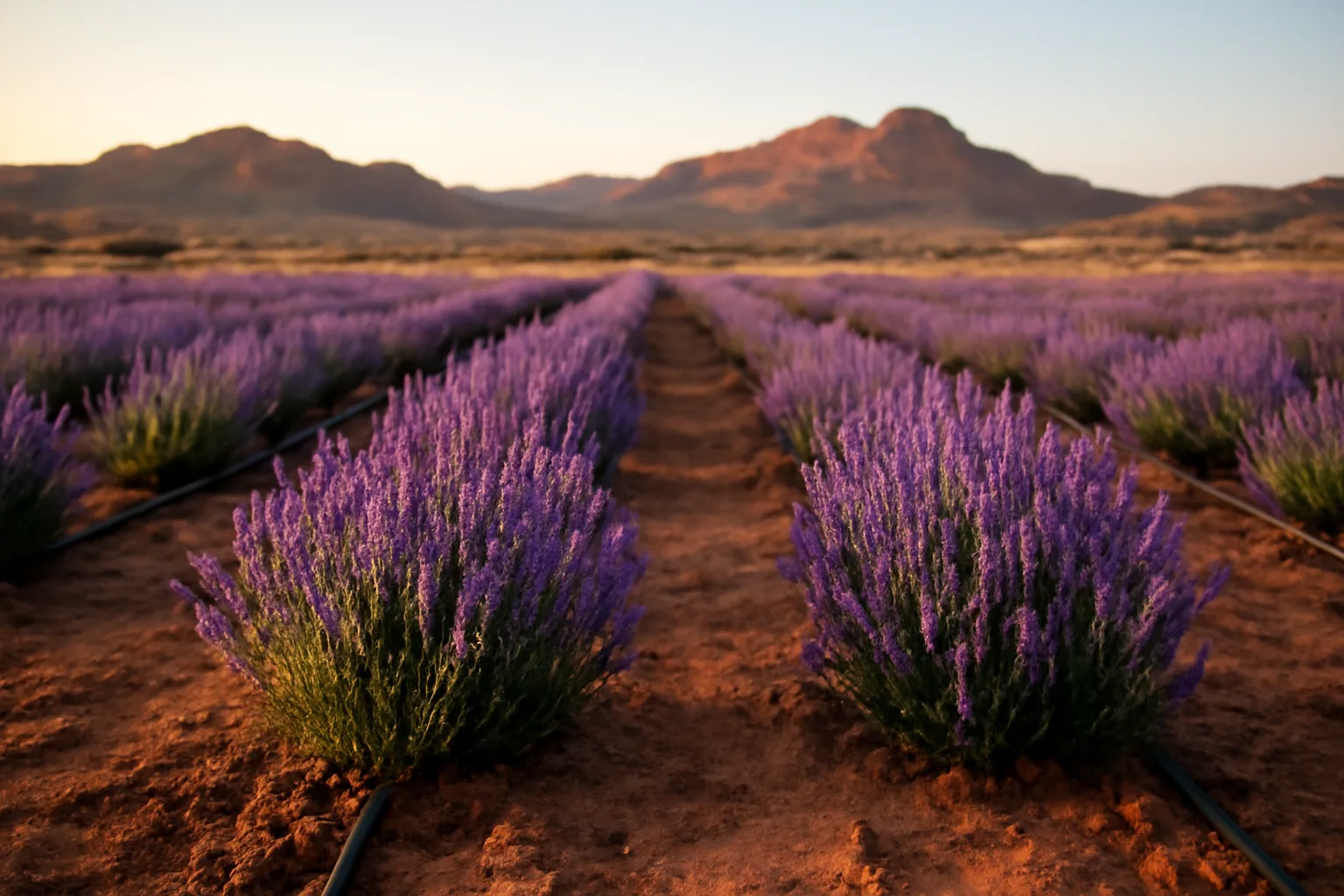
Growing lavender in Arizona does not require a state lavender farm license. If you sell dried stems, U-pick, oil, or value-added goods, you almost always need a $12 transaction privilege tax license from the Arizona Department of Revenue, plus local zoning and possible plant or food permits. Budget land separately. Planting and drip irrigation often runs $8,000 to $15,000 per acre. First real harvest is year two or three.
Do you need a license to grow lavender in Arizona?
No. Arizona has no state-level lavender farm license or agricultural production license for a row crop like lavender. You can plant, irrigate, dry, and store lavender without asking the Arizona Department of Agriculture for a field permit.
That answer surprises people because the national conversation mixes up "farm" and "retail." A farm that only grows a crop does not need a state farm license. The moment you sell something at retail, the picture changes.
I see this as a good thing for first-year Arizona operators. You are not waiting on a specialty license before you can put plants in the ground. But you still have to check county zoning before you cut a field road or put up a shed. And you will need to register a business name if you run as an LLC or partnership. More on that below.
What Arizona license do you need to sell lavender?
The one flat state requirement for most lavender sellers is the Arizona transaction privilege tax license, often called a TPT license. Arizona statutes set the annual license fee at "twelve dollars per location" [1]. The Arizona Department of Revenue explains that businesses need a TPT license before engaging in taxable activity [2].
Selling cut lavender, dried bundles, sachets, essential oil, U-pick admissions, and most value-added nonfood goods is taxable retail in Arizona [2]. You apply with the Arizona Joint Tax Application, form JT-1, online or on paper [3]. Most small farm stands need only one state TPT license for a single location. A second physical location needs another $12 license.
Do not confuse the TPT license with a city or county business license. Some Arizona cities add their own licensing fee and local TPT rate on top of the state rate. ADOR publishes current rate tables by city and county. Check your exact address before your first sale.
How much does the Arizona TPT license cost?
The state TPT license costs $12 per location, and it is an annual fee [1]. I know that number sounds too small to be the whole story. That is because the license fee is separate from the tax you collect and remit.
Your actual tax liability depends on the product. Retail sales of tangible personal property are generally taxable, but some agricultural inputs are exempt. For example, seeds and propagative plant material sold for planting may qualify for an agricultural exemption. That does not usually exempt your retail dried lavender bundles. Confirm your classification and rate with ADOR before setting prices [2][3].
City and county transaction privilege taxes run from about 0% to more than 3% depending on location, on top of the state retail rate. Those combined rates change. I would not build a budget around a rate you saw on a national website. Check ADOR's current tax rate tables for your business address [11].
Do you need a nursery license to sell lavender plants in Arizona?
Yes, if you sell rooted starts or potted lavender plants, you are selling nursery stock, and Arizona regulates that through the Arizona Department of Agriculture Plant Services Division [4]. A nursery license, sometimes called a nursery stock certificate, is separate from the TPT license. It covers the plant health inspection side.
This trips up a lot of U-pick owners. You may be fine selling cut stems without a nursery license. You are not fine selling a tray of live starts at the same stand without checking with AZDA first.
AZDA can inspect your propagation area, ask about soil and weed management, and require a fee that varies by class and inventory. The fee is not a single flat Arizona number. Call the Plant Services Division before you order plugs for resale [4]. For a broader look at setup, start with how to start lavender farm in Arizona.
Do lavender food and body products need separate permits in Arizona?
Food is where people lose money by skipping the paper path. If you sell lavender tea, dried culinary lavender, infused honey, jelly, or baked goods made in a home kitchen, Arizona's cottage food program may cover you. That program is run through the Arizona Department of Health Services, and it requires registration or approval for eligible low-risk foods [5]. A retail food establishment permit is a different, heavier route.
Cosmetics and soaps do not need a state license from ADHS. They do fall under federal labeling and adulteration rules. The FDA does not approve cosmetics before sale, but it can act if a product is unsafe or misbranded [10]. Lavender essential oil is not generally a regulated food product, but lavender oil sold for aromatherapy should be labeled honestly. Do not claim it treats a disease.
If you distill, the county may treat your still as a processing use. That often triggers fire review, wastewater review, and a building permit. No state liquor license applies because you are not producing alcohol for beverage use in a typical essential oil distiller.
What county and zoning approvals does a lavender farm need in Arizona?
There is no single Arizona county answer. An agricultural zoned parcel in Yavapai County may allow crop production by right, while the same farm stand may need a conditional use permit in Cochise County. Some counties allow agritourism events like U-pick festivals with a simple temporary use permit. Others want parking, dust abatement, and septic plans.
You should call the county planning department and ask a specific question: "Does a small lavender U-pick and farm stand require a conditional use permit on an RU-zoned parcel?" Write down the answer and the planner's name or case number. Do not rely on a real estate listing or a neighbor.
Water is the other local layer. If you irrigate from a well, Arizona requires well registration with the Arizona Department of Water Resources, and pumping rules inside Active Management Areas differ [9][12]. Surface-water rights are a separate legal question. This is a bigger deal than the $12 tax license.
How much does a lavender farm cost in Arizona?
No Arizona-specific extension budget exists. The closest real data points are the USDA land values report and national lavender enterprise guides. USDA's Land Values 2024 Summary shows Arizona farm real estate averaging under $8,000 per acre [6]. That average includes rangeland and dryland parcels far from the small irrigated areas where lavender usually lands. A two to five acre irrigated parcel near Prescott, Sonoita, or Cornville can list for tens of thousands per acre on the open market. Land cost is local and volatile.
For field establishment, NCAT's lavender production guide describes establishment costs that often fall between $8,000 and $30,000 per acre before land, depending on plant density, drip irrigation, labor, and fencing [7]. In Arizona, I would budget near the middle or upper end if you have to build a well, buy water shares, or truck in soil amendments. Nothing about high desert lavender is cheap if water is not already proven.
A rough Arizona field budget for a one-acre planting, excluding land and buildings, looks like this:
| Item | Low end | High end |
|---|---|---|
| Plants (2,000 to 3,000 plugs) | $3,000 | $6,000 |
| Drip irrigation and filter | $2,000 | $5,000 |
| Soil prep and compost | $1,000 | $3,000 |
| Labor and weed control, first year | $2,000 | $5,000 |
| Fencing for rabbits and javelina | $500 | $2,000 |
| Total first-year field cost | $8,500 | $21,000 |
Those numbers are a planning range based on the NCAT guide and normal Arizona vendor quotes, not a state publication [7]. Javelina fencing alone can blow the upper number if you pick the wrong location.
LavenderKit's $149 one-time Cultivar + Distill + U-Pick Kit is not a farm budget. It is a planning kit. Do not confuse the cost of a binder with the cost of a drip system. The real money is water and plants.
How long does a lavender farm take in Arizona?
Plan on two seasons before you have a meaningful harvest. First-year lavender works on roots. Year two gives a light cut. Year three and four is when English and hybrid lavender in Arizona starts producing the volumes you see in photos.
The licensing timeline is much shorter. A complete TPT application can be submitted the same day you decide to sell, and many small operations get their license without a long inspection period [3]. Local zoning and well permits add time. A conditional use permit in a busy county can take 30 to 120 days or more. ADWR well registration has its own timeline [9].
If you plant in fall after the worst heat, you shave months off the first-year stall. Spring planting in the low desert often means baby plants hit 110-degree days before roots are deep. I would not plant lavender in Phoenix in June. That is not a paper path issue, but it costs time.
The honest answer: you can have the license in a week or three, plants in the ground in a month, and first real revenue in year two or three. Full establishment and break-even usually run four to five years [7].
What lavender varieties and plant spacing work in Arizona?
Variety matters. USDA lists Lavandula angustifolia as a perennial subshrub suited to well-drained soil [8]. In Arizona, the English lavenders like Munstead and Hidcote tend to survive better at higher elevations because they want winter chill. The French and dentata types handle heat but hate cold snaps and wet roots.
Spacing runs from 24 to 36 inches in row, with rows 4 to 6 feet apart. That gives 2,000 to 2,700 plants per acre at the closer end. Densities often go lower in Arizona if you rely on flood or basin water.
I would not choose a single variety for a first-year Arizona field. Plant a test block of at least three varieties and watch them for heat, cold, and soil drainage before committing to thousands of plugs. That advice costs less than a failed acre. For a similar high-elevation setup, how to start lavender farm in Colorado covers the establishment path.
How does water and irrigation work for a lavender farm in Arizona?
Lavender wants dry crowns and regular but modest water. In Arizona, dry is usually not the problem. Heat and reflected sun are. Drip irrigation is the usual choice. If you have a well, Arizona well registration is required and pumping may need to be reported inside AMAs [9][12]. If you are on municipal water, your bill becomes a much bigger part of the cost sheet.
Groundwater management areas in Arizona include Prescott, Phoenix, Tucson, and other regions, and they have stricter reporting rules [12]. Outside AMAs, the law is looser, but that does not mean water is unlimited. A well that pumps sand or high salts can ruin lavender's drainage advantage.
My rule for Arizona lavender: prove water quality before you plant. Get a lab test for salts, pH, and sodium adsorption. Lavender tolerates some alkalinity but not waterlogged roots. When in doubt, build the raised berm first.
What should you file first for an Arizona lavender farm?
Here is the order I would hand a friend: 1. Check county zoning. No license matters if the parcel cannot legally host a farm stand. 2. Register your business name and entity with the Arizona Corporation Commission or county recorder if needed. 3. Apply for the TPT license through ADOR before selling [3]. 4. If selling live plants, call AZDA Plant Services [4]. 5. If selling prepared food, check ADHS cottage food rules [5]. 6. If irrigating from a well, confirm ADWR registration [9]. 7. Buy insurance before you invite the public for U-pick.
That order is not legal advice. It is the order that catches the most Arizona-specific mistakes before they cost real money.
Which board or department confirms each Arizona lavender requirement?
Confirm these with the named board or department:
- ADOR: TPT license fee is $12 per location [1].
- AZDA: nursery stock sales need a plant services license [4].
- ADHS: cottage food registration applies to many home-kitchen lavender foods [5].
- ADWR: wells must be registered and pumping reported in AMAs [9][12].
Do not believe the national myth that a "lavender farm license" exists as a single state paper. It does not in Arizona. What you actually need is layered: tax, nursery if applicable, food if applicable, water, zoning.
For a Utah comparison, Lavender farm license in Utah walks the same layered paper path. Pair that with lavender farm cost in Utah for a nearby desert-state comparison.
What should a first-year Arizona lavender grower do next?
Plant a small trial row, not five acres. Get your TPT license only when you have something to sell, not on day one of dreaming. Find an existing Arizona lavender farm in your county and ask what their irrigation water chemistry is. That single data point will tell you more than any national article.
If you are still in the comparison stage, start with how to start lavender farm in Arizona and then check lavender farm license in California for the differences in a neighboring state. Also see how to start lavender farm in Vermont for the opposite end of the climate. The paper path differs more than the rows do.
The LavenderKit planning kit and /start workflow can hold the checklist, but the county planner and ADOR are the authorities.
Frequently asked questions
Do you need a license for a lavender farm in Arizona?
No. Arizona has no state lavender farm license for growing lavender as an agricultural crop. You do need a $12 Arizona transaction privilege tax license before making retail sales of lavender, and you may need a nursery license for live plants, food registration for prepared foods, county zoning approval, and well registration for irrigation water. Confirm each with the named department.
How much does a lavender farm cost in Arizona?
Land is the volatile part. USDA's 2024 Land Values Summary puts Arizona farm real estate under $8,000 per acre on average, but small irrigated parcels in good lavender counties often list far higher. Field establishment commonly runs $8,000 to $30,000 per acre before land, depending on plants, drip irrigation, fencing, and labor [6][7]. A low-frills one-acre field can start near $8,500, with water and soil prep pushing it higher.
How long does a lavender farm take in Arizona?
Licensing can take days to a few weeks for the TPT license, but local conditional use permits and well registration can add one to four months or more. The crop itself needs time. Expect first light harvest in year two and meaningful volume in year three or four. Break-even often lands in year four or five if land and water costs are not extreme [7].
Is lavender farming profitable in Arizona?
It can be at higher elevations and with direct sales or value-added products. The low-humidity air reduces fungal problems, but water costs and extreme heat are the main risks. Profit depends on land cost, irrigation reliability, and whether you sell U-pick stems, essential oil, plants, or prepared goods. Do not project based on a national yield number. Test your own block first.
What is the best lavender to grow in Arizona?
English lavenders like Munstead and Hidcote do best where there is some winter chill, usually above 3,000 feet. Lavandula x intermedia varieties like Grosso can handle more heat and produce more oil. Avoid heavy soils and low-desert afternoon sun. Plant a small test block of at least three varieties before scaling up [8].
Can I sell lavender at an Arizona farmers market without a license?
No. Even a weekend market booth is a retail sale in Arizona. You need a transaction privilege tax license from the Arizona Department of Revenue, and the market may have its own vendor insurance and food permit requirements. The state license is $12 per location [1][2]. Check the city too. Some add a local business license.
Does Arizona require a special license to distill lavender essential oil?
There is no state lavender distiller license. Distilling is usually treated as processing. The county may require a building permit, fire review, or wastewater plan, and the TPT license still applies when you sell oil [2]. If you make cosmetic claims, FDA labeling and safety rules apply [10].
Do I need a water right to irrigate lavender in Arizona?
If you use a well, Arizona requires well registration and may require pumping or water-use reporting, especially in Active Management Areas [9][12]. Surface water rights are separate and often inherited with the land. Before buying or planting, confirm what the deed allows and ask for a water quality test.
What county in Arizona is best for lavender?
No single county wins. Higher-elevation areas in Yavapai, Coconino, Cochise, and parts of Santa Cruz counties have the cooler nights English lavender likes. Mohave and Maricopa low-desert sites can work with afternoon shade and careful variety choice. But county zoning differs, so check planning rules before comparing climate.
Can I run a U-pick lavender farm on agricultural zoned land?
Often yes, but the farm stand and visitor part may need a conditional use permit or temporary event permit depending on the county. Agricultural zoning usually allows crop production by right. Inviting the public, adding parking, and selling non-farm items can trigger review. Ask the county planner for a written determination.
How many lavender plants per acre in Arizona?
Common densities run from 2,000 to 2,700 plants per acre, using 24 to 36 inch in-row spacing and 4 to 6 foot rows [7]. In hotter Arizona sites, lower density can reduce water stress and improve air movement. Start with a small block to see the local drought and heat response before buying thousands of plugs.
Do I need an Arizona nursery license to sell potted lavender?
Yes, if you sell live rooted plants or starters, the Arizona Department of Agriculture Plant Services Division regulates that as nursery stock [4]. The TPT license is separate and also applies. Cut stems and dried bundles do not usually require a nursery license, but potted plants do.
Is a TPT license the same as a sales tax license?
Close, but not exactly. Arizona's transaction privilege tax is a tax on the privilege of doing business, legally imposed on the seller, not a pure sales tax. In practice, sellers collect it from customers and remit it. The license required to do that is the TPT license, and the state fee is $12 per location [1].
Sources
- Arizona Legislature, A.R.S. 42-5005: Arizona transaction privilege tax license fee is twelve dollars per location.
- Arizona Department of Revenue, Transaction Privilege Tax License: Businesses need a TPT license before engaging in taxable retail activity in Arizona.
- Arizona Department of Agriculture Plant Services Division, Nursery License: Selling nursery stock in Arizona requires a license from the Arizona Department of Agriculture.
- Arizona Department of Health Services, Cottage Food Program: Cottage foods made in a home kitchen for direct sale require state registration or approval.
- USDA National Agricultural Statistics Service, Land Values 2024 Summary: Arizona farm real estate averaged under $8,000 per acre in 2024.
- NCAT ATTRA, Lavender Production and Marketing: Lavender field establishment costs commonly run $8,000 to $30,000 per acre before land.
- USDA NRCS PLANTS Database, Lavandula angustifolia: English lavender is a perennial subshrub suited to well-drained soil.
- Arizona Department of Water Resources, Well Registration: Wells in Arizona must be registered, and pumping may require reporting.
- Arizona Department of Water Resources, Active Management Areas: Groundwater pumping rules differ inside Arizona Active Management Areas.