Last updated 2026-08-20
TL;DR
California has no statewide lavender farm license. Sell anything and you hit a CDTFA seller's permit. Sell live plants and you hit a CDFA nursery license. County zoning and well permits sit on top. USDA put California farm real estate near $13,400 an acre in 2024, more than three times the U.S. average. Plants and drip often add mid five figures per acre. Full bloom takes about three seasons.
How much does a lavender farm cost in California?
A first planted acre in California often runs mid five figures for plants, drip, fence, and hired field time, before you buy or lease the dirt. Then land dwarfs all of it in most coastal and valley counties. USDA NASS put California farm real estate at $13,400 per acre in 2024. The U.S. average in the same report was $4,170.[1]
That statewide figure is an average, and averages lie in a state this wide. It mixes rangeland, desert edges, and irrigated blocks with houses on them. A dry foothill parcel in Tehama County does not price like a fenced five acres off Highway 101 in San Luis Obispo County. Shopping dirt? Pull current listings and the latest NASS Land Values table. Do not treat $13,400 as your bid.
I would not start by buying. Lease a couple of acres with irrigation already in the ground if you can find it. Buying California ag land to learn a crop is how people light money on fire.
Plant bills are the easy part. At common English lavender spacing you order roughly 1,800 to 2,900 plants per acre. Wholesale 4-inch plants often land somewhere from a few dollars to about $10 each, and that spread is real because cultivar and liner size move the quote. Do the math on your own invoice. Nobody should pretend there is one California plant price.
Drip hardware, a filter, and a pressure regulator add another slice. UC Davis still does not publish a current lavender cost study, so I will not invent a neat official total. The honest method is plain: plant count times quoted price, plus a drip parts list from an irrigation dealer, plus deer fence if you have deer, plus your county's well or meter reality.
Year-one cash also includes the boring paper. A seller's permit. A county business license if your city or county wants one. Maybe a CDFA nursery license. None of those rival the land line. They still stall you if you skip them.
Want a cheaper land story? Read how the same crop pencils in lavender farm cost in Arizona or lavender farm cost in Idaho. The plants look alike. The dirt does not.
Do you need a license for a lavender farm in California?
No. California does not issue a single license titled lavender farm. Growing lavender on land zoned for agriculture is usually a by-right farm use. Selling anything, inviting the public, or moving water is what triggers other paper. The stack is local plus state. It is never one form.
Sell bunches, plants, oil, or soap and CDTFA treats you as a seller of tangible goods. Their rule is blunt. "You must obtain a seller's permit if you are engaged in business in California and intend to sell or lease tangible personal property that would ordinarily be subject to sales tax if sold at retail," per CDTFA.[2] The permit itself has no fee. CDTFA can still ask for a security deposit in some cases. Confirm that with them. Do not guess.
Selling live plants is a different door. CDFA requires a license to sell nursery stock in California.[3] Dried bundles are not nursery stock. A tray of potted starts in the farm stand is. Confirm the current fee and any inspection with CDFA Nursery Services. I will not quote a fee here because those numbers move.
Certified farmers' markets need a Certified Producer's Certificate from your county agricultural commissioner under the state market program.[4] That certificate is not a farm license. It is market access paper. Direct farm-gate sales can follow a different path. Ask the commissioner before you print a banner.
You still need an EIN if you hire anyone or want a bank account that is not in your personal name. The IRS application is free online.[11] A city or county business license is separate and not standardized. Call the city clerk or county tax collector for the parcel you will actually use.
U-pick, weddings, and parking lots are where people get surprised. That is usually a zoning or use-permit question for planning staff, not the ag commissioner. Budget time for that conversation before you advertise bloom weekends.
How long does a lavender farm take in California?
Plan on three growing seasons before you get a real commercial flush. Oregon State University's lavender guide, which matches the plant biology you will see in California's dry-summer climate, treats planting as an establishment period rather than a harvest year.[7] ATTRA's production guide describes the same ramp: light bloom while plants root, then a heavier cut later.[8]
Year one is dirt work. You fix drainage, lay drip, plant, and keep weeds from burying small liners. Many growers strip first-year bloom so the plant puts energy into wood. That is a cost year. It is not a revenue year you should take to the bank.
Year two gives you a usable harvest if the plants took. It is still not peak. Year three is when English types finally look like the photos people use on booking sites. Woody lavandins can run faster or slower by cultivar. Nobody has a clean public California yield series by county. So here is the honest floor: do not write a loan payment that needs a full oil crop in month 14.
Paper time sits beside plant time. A seller's permit can be quick. A well permit, a grading permit, or a use permit for public visits can eat a season. I will not promise processing days. Those clocks live at the county counter and they change with staffing. Confirm with the relevant board.
Low desert or far north? Frost and heat shift the calendar. Coastal fog belts stay milder and stay damper. Damp is the enemy of lavender wood. Pick the site for drainage first, then argue about bloom selfies.
What does land cost for a lavender farm in California?
Land is the line that decides whether a California lavender farm is a crop or a real-estate hobby. USDA NASS reported California farm real estate at $13,400 per acre in 2024.[1] That is more than three times the national average in the same summary. Irrigated blocks near towns with tourist traffic often trade above the statewide mix. Dry rangeland can sit under it.
I would shop the county assessor map before I shop Instagram farms. Look at comparable ag sales, not home sites with a lavender logo. If the listing is priced like a house lot, you are not buying a farm. You are buying a yard.
Property tax can soften if the parcel already sits under a Williamson Act contract. Government Code section 51200 is the short title of the California Land Conservation Act, the statute behind those contracts.[14] Enrollment, term, and whether your county still takes new contracts are local questions. Confirm with the assessor and the county planning department. Do not assume you can sign up next Tuesday.
Water rights ride with the dirt. A pretty hillside with no well and no district turnout is a photo op, not a field. Title reports and a well completion check with the county matter more than flower color.
If land sticker shock is the whole story, cheaper-state writeups such as lavender farm cost in Colorado show how fast the budget changes when dirt is not thirteen thousand dollars an acre.
What do plants, drip, and year-one field work cost?
Run the plant math yourself. At 3 feet by 5 feet you are near 2,900 plants per acre. At 4 feet by 6 feet you drop closer to 1,800. OSU's production notes treat those spacing choices as a real yield and weed-control trade, not decoration.[7] Multiply by the quote on the cultivar you actually want. Grosso and Hidcote are not the same invoice.
I would plant two, maybe three, cultivars the first spring. A catalog of fifteen named types is a hobby order. It is also a harvest headache. You do not need a rainbow to sell bunches.
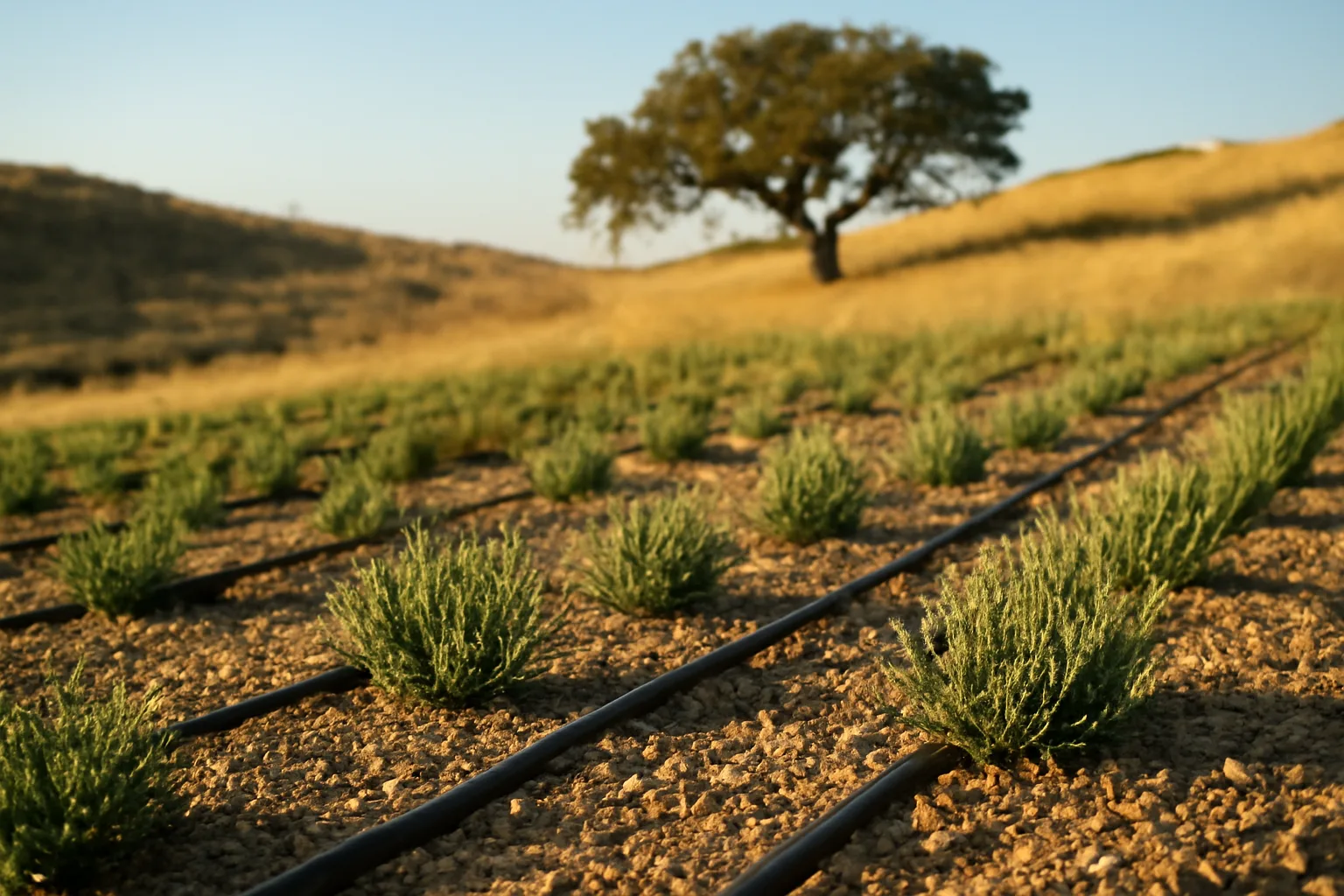
Drip is not optional in a California summer once the plants leave the nursery. A simple surface drip kit for a small acre is often a low four-figure parts bill if you already have a decent pressure source. Pump work, filtration for dirty well water, and a new service panel can jump that fast. Get a dealer quote. Do not use a blog number from 2014.
Fence is the line people skip, then they replant. Deer country wants height. Rabbit country wants a tighter bottom. I have no statewide fence price that is honest, because terrain and material swing it. Ask two fence crews. If they both wince, believe them.
Site prep is dirt, not romance. Lavender dies in wet feet. Raised beds or ripped berms on heavy clay cost tractor time. A soil test through a private lab or your UCCE county office is cheap next to a dead field. ATTRA's production chapter reads well on drainage and establishment even though it is not a California cost study.[8]
Labor in year one is planting, tubing, and weeds. California's statewide minimum wage is $16.50 an hour as of January 1, 2025, and some cities sit higher.[5] Hire, and you are not paying porch-cash math from a decade ago.
What extra paper shows up if you sell plants, oil, or food?
The farm can be simple. The products are not. Live plants pull the CDFA nursery license.[3] Market stalls pull the certified producer path if you want a certified farmers' market.[4] Oil, salve, and soap sit in cosmetic or general merchandise rules depending on the claim on the label. I am not your label lawyer. Read FDA cosmetic guidance and California's Safe Cosmetics rules before you print "heals eczema" on a tin.
Food is the sharp edge. Cottage food in California is a closed list of low-risk items made in a home kitchen. CDPH runs that program.[9] A lavender sugar cookie may fit. A bottled culinary hydrosol or a jar of infused honey often does not. If you are processing food outside that list, CDPH processed food registration is the usual next stop, plus a county environmental health plan check.[10]
A still is farm equipment until the fire marshal, the air district, or the planning counter says it is a manufacturing use. Confirm that locally. Do not buy a 200-liter copper unit to "see." That is how garages become code cases.
Organic claims have their own door. Want the word organic on a label above the federal small-operation exemption? You need a certifier and CDFA's organic registration on top of NOP rules. Confirm current thresholds with AMS and CDFA. I will not invent a quota.
Pesticides, even organic-approved ones, can require a license or a restricted-materials permit through DPR and the county ag commissioner.[12] Many small lavender farms use almost no spray. If you do spray, ask the commissioner before the tank is mixed.
A paper checklist helps when this stack gets long. LavenderKit sells a $149 Cultivar + Distill + U-Pick Kit that maps the usual California path. It is not a license and it does not file anything for you.
Can you start a California lavender farm on leased land?
Yes, and I would. A written agricultural lease with water, access, and a plant-removal clause beats a land loan while you learn whether you even like harvest week. Ask for at least five years if you are paying to install drip. Plants are not annuals.
Get the well or turnout in writing. "The owner has water" is not a term. Meter the pump. Name who pays the electric bill in August.
Zoning still applies to the tenant. If you want u-pick, the use has to be legal on that parcel, more than allowed in your head. Planning staff can kill a bloom-season plan in one counter visit. Have that visit before you order 4,000 plugs.
Lease rates for California cropland move by irrigation and county. USDA publishes cash rent surveys, but I will not paste a single statewide rent here as if it were your landlord's number. Pull the current NASS cash rent release for California and then call three local growers. The local number wins.
Improvements you pay for should have a buyout or stay-behind rule. Drip and deer fence left behind on year three with no credit is a donation, not a business.
What labor rules change the cost of a lavender farm in California?
Hired harvest in California is not casual. Statewide minimum wage is $16.50 an hour in 2025, with higher city floors in some places.[5] Piece rate still has to clear that floor for the pay period. If you do not want to run payroll, stay small enough that family labor is real, not a story.
Agricultural overtime completed its long phase-in under AB 1066. The DIR fact sheet walks through the 8-hour day and 40-hour week shift that now applies across farm employers.[13] Confirm the current fact sheet if you are hiring a crew. Do not use a 2016 blog post about the old 10-hour farm day.
Heat is not a suggestion. Title 8 section 3395 says, "This section applies to all outdoor places of employment," per Cal/OSHA.[6] Shade, water, rest, and training are required. That is a real cost in July in the valley. Ignore it and you are betting the farm on a Cal/OSHA visit.
Workers' comp exists once you have employees. Quotes vary by payroll and class code. I will not invent a premium. Call a farm insurer with your actual acreage and job list.
Unpaid interns who "just want to be around flowers" are how small farms get ugly claims. If they are workers, pay them.
How do wells, water districts, and drought rules change the budget?
Lavender is tough once it is rooted. It is not a dryland miracle in a Central Valley July if you plant liners into powder. You will irrigate through establishment. After that you can cut back. You cannot skip a water plan.
A new well is a county environmental health or local agency permit, plus a driller, plus a pump, plus power. Costs jump with depth. I will not publish a fake statewide well price. Get two well logs for neighboring parcels and a written drill quote.
District water is a turnout, a wait list, or a hard no, depending on the district and the year. SGMA groundwater rules can limit new pumping in some basins. That is a local groundwater sustainability agency question, not a vibe. Confirm before you close on land.
Drip plus mulch plus decent timing beats overhead spray for this crop. Overhead keeps foliage wet. Wet foliage on a cool night is how you buy disease.
If the parcel has no water and no realistic well, walk away. Pretty views do not fill a tank.
Which first-year lavender farm costs in California are a waste?
A visitor bathroom building before you have a third-year bloom is a waste. So is a tasting room for oil you have not distilled. Build a shade pop-up and a portable toilet the county will accept for a small u-pick, if they allow u-pick at all. Then see if anyone comes.
A giant still in year one is a waste. Contract distill a tote or skip oil until the field exists. Oil pounds from a young acre will not pay for copper.
Fifteen cultivars is a waste. Two workhorses for bunches and one for oil is plenty. You can add later from cuttings.
A full retail remodel of a barn is a waste until planning signs off on public use. Paint is cheaper than a stop-work tag.
National "turnkey lavender franchise" packages that assume cheap dirt and free family labor are a waste in this state. California land and payroll do not match those spreadsheets.
What I would spend on: soil work, drip, fence, clean plants from a licensed nursery, and a lawyer hour on the lease. Boring wins.
How does California lavender farm cost compare with other states?
The plants do not cost three times more here. The dirt does. USDA's 2024 farm real estate gap between California and the national average is the whole plot.[1] Labor sits higher too because of the $16.50 statewide floor and the farm overtime rules.[5][13]
Humidity states trade land savings for disease pressure. Lavender farm cost in Florida is a plant-health problem, not a free lunch. Cold states trade land savings for winter kill. Lavender farm cost in Illinois makes that trade obvious.
Island freight flips the plant bill. Lavender farm cost in Hawaii is a logistics story more than a land-average story.
I would still start in California if my market is California weekends and I already control land. I would not move here to become an oil exporter. Commodity oil does not service this real estate.
What should you confirm with the county before you order plants?
Call planning and ask if agriculture is allowed on the parcel, and whether public u-pick needs a use permit. Call the ag commissioner and ask about a certified producer certificate, nursery stock, and any pesticide registration. Call environmental health if you want food or a well. Call CDTFA for the seller's permit.[2] Call CDFA if plants will be sold.[3]
Write down names and dates. County websites lag. The person at the counter is the source of record for fees and forms.
LavenderKit is an independent publisher, not a law firm and not a filing service. If you want that paper path in one packet, the kit is at /start. The county still has the last word. No article can promise an approval or a timeline.
Order plants after the water and the use are real. Pretty liners do not fix a no-well parcel.
Frequently asked questions
Do you need a license for lavender farm in california?
No single statewide lavender farm license exists. Growing on ag-zoned land is usually allowed as farming. Selling goods needs a CDTFA seller's permit. Selling live plants needs a CDFA nursery license. Markets need a county certified producer certificate. U-pick can need a planning permit. Confirm each item with the board that issues it.
How much does lavender farm cost in california?
Budget mid five figures per planted acre for plants, drip, fence, and year-one labor, then add land. USDA NASS put California farm real estate at $13,400 per acre in 2024. Coastal tourist parcels often run higher. Leasing irrigated ground cuts the first check. There is no current UC Davis lavender cost study, so treat any neat total you see online as a guess.
How long does lavender farm take in california?
About three growing seasons to a commercial flush. Year one is establishment. Year two is a light to moderate cut if plants took. Year three is when English types usually look full. County well or use permits can add months before you plant. Confirm those clocks locally. Do not promise oil income in the first spring.
Is a lavender farm profitable in California?
Oil by the pound rarely pays California land. Farms that stay open usually stack u-pick, dried bunches, plants, and small value-added sales. Nobody publishes a clean statewide net-income series for this crop. If the parcel already costs house-lot money, treat it as a hospitality business on a farm, not a commodity field.
How many acres do you need to start a lavender farm in California?
Two well-tended acres can support bunches, a small u-pick, and products if zoning allows visitors. Ten acres of oil plants on expensive dirt is a hard way to learn. I would start on one to three planted acres and keep a written option on the next block. Plant density matters more than a big outline on a map.
Do you need a seller's permit to sell lavender bunches in California?
Yes, if you are in business in California and sell tangible goods that are ordinarily taxable. CDTFA issues the seller's permit and does not charge a fee for the permit itself. Some accounts face a security deposit. Food and plant sales can add other paper. Apply with CDTFA and ask them how your mix of farm products is taxed.
Can you distill lavender oil on a California farm without a food facility?
Aromatherapy oil is usually not a cottage food. A still can also trigger fire, zoning, or air-district questions. Culinary hydrosol or any food use points toward processed food registration and county health. Confirm the use with planning and environmental health before you fire a boiler. A first-year still is optional. The field is not.
Does a u-pick lavender farm in California need extra permits?
Often yes. Public parking, restrooms, signs, and event days are planning issues in many counties. Agriculture by right does not always include a weekend festival. Ask planning, not only the ag commissioner. ADA access and fire access come up once you invite strangers. Get that answer before you take online bookings.
What does drip irrigation cost per acre for lavender in California?
A simple surface drip parts list for one acre is often low four figures if pressure and filtration already exist. New pumps, power, or dirty-water filtration climb fast. There is no current UC lavender irrigation budget. Get a written dealer quote for your well or meter. Overhead spray is a poor fit for this crop on cool nights.
Can you grow lavender in California without a well?
Only if you have a reliable district turnout, a legal hauled-water plan the county accepts, or enough stored water for establishment plus a hot summer. Most inland sites need on-farm water. A pretty dry hillside with no source is not a field. Check well logs and district rules before you close.
Are there grants for a new lavender farm in California?
NRCS EQIP can cost-share irrigation or soil practices if you rank and get selected. FSA has beginning-farmer loan paths. CDFA specialty crop grants usually fund groups and research, not one person's startup. None of these are automatic. Confirm current sign-up with the local NRCS and FSA office. Do not budget a grant you do not have.
Do you pay sales tax on lavender you grow in California?
It depends on the product. Many value-added goods are taxable. Some farm products get special treatment. CDTFA is the source of record, not a farm blog. Get the seller's permit and ask them how bunches, plants, oil, and food each tax. Keep invoices. Guessing on tax is more expensive than the permit.
Which California counties work best for a lavender farm?
Look for hot dry summers, cold enough winters for English types if you want them, and sharp drainage. San Luis Obispo inland, Santa Barbara inland, parts of Sonoma, El Dorado, Tehama, Shasta, and San Diego backcountry all have working fields. Foggy wet belts fight wood rot. Tourist traffic helps u-pick and hurts land price. Walk soil pits, more than bloom photos.
Should you buy plants or start from cuttings in year one?
Buy plants the first spring if you want a field this year. Use a licensed nursery so you are not importing pests. Cuttings are cheaper once you own mother plants and have a season to root them. I would not delay a whole year to save a few dollars a liner while land sits idle. Two proven cultivars beat a cutting circus.
Sources
- USDA NASS Land Values 2024 Summary: California farm real estate averaged $13,400 per acre in 2024 versus a U.S. average of $4,170
- CDTFA seller's permit FAQ: A seller's permit is required to sell taxable tangible personal property in California; the permit has no fee
- CDFA Nursery Licensing program page: A CDFA license is required to sell nursery stock in California
- CDFA Certified Farmers' Market Program: Certified producer certificates for certified farmers' markets are issued through county agricultural commissioners under the state program
- California DIR minimum wage FAQ: California statewide minimum wage is $16.50 per hour as of January 1, 2025
- Cal/OSHA Title 8 section 3395 Heat Illness Prevention: Heat illness prevention rules apply to all outdoor places of employment
- Oregon State University Extension EM 8955 Growing Lavender in Oregon: Lavender establishment and spacing guidance; commercial production ramps over multiple seasons
- ATTRA Lavender Production, Products, Markets, and Entertainment Farms: Production practices, establishment period, and entertainment-farm market model for lavender
- IRS Apply for an Employer Identification Number (EIN) Online: EIN application is available online at no charge
- California DPR License and Certification: DPR licenses and certificates are required for specified pesticide work in California
- California Government Code section 51200: Section 51200 is the short title of the California Land Conservation Act (Williamson Act)