Last updated 2026-08-19
TL;DR
If you already own well-drained ground, a 1 to 2 acre Indiana lavender start often costs $20,000 to $50,000 in plants, drip, beds, and basic u-pick gear. Buying average farmland adds about $12,000 an acre on Purdue’s quality-tier survey. You do not need a crop license to grow. Selling live plants needs an Indiana DNR nursery license. Full harvest takes about 3 years.
How much does a lavender farm cost in Indiana?
A working 1 to 2 acre lavender farm Indiana start usually costs $20,000 to $50,000 if you already own drained ground, and $40,000 to $150,000 or more if you buy land, put up a shed, and build parking. Land is the swing factor. Plants and drip are not.
Nobody publishes a clean Indiana lavender enterprise budget. The closest public crop profiles sit at the University of Kentucky and Penn State, and they treat establishment as a multi-year cash drain, not a year-one profit story. [3][10]
I'd budget in layers.
Land comes first if you do not already have it. Purdue’s June 2023 farmland survey put average-quality bare Indiana ground at $12,408 an acre, top quality at $14,826, and poor quality at $9,351. [2] Later Purdue surveys stayed in that same high band. Confirm the current PAER table before you bid. USDA’s 2024 Land Values Summary put the national farm real estate average at $4,170 an acre, which is why the Indiana sticker shock is real. [1]
If you can rent, do that for the first three years. Cash rent on ordinary Indiana ground is a few hundred dollars an acre. That is cheap tuition compared with a mortgage on land a lavender crop will not pay for yet.
Plants come next. Figure 2,000 to 4,000 plants an acre depending on spacing. Wholesale plugs often land around $1.50 to $4 each once you add freight. That is $4,000 to $16,000 an acre before you water them. UK’s lavender profile walks plant populations and the fact that full production waits until year three. [3]
Beds, drainage, and drip matter more here than in a dry state. Indiana soils stay wet. Lavender dies wet. Raised beds, gravel, and tile or at least a slope you can prove on Web Soil Survey are not optional. [11] I would rather spend $2,000 to $6,000 an acre on drainage and drip than lose a field in year two. A fancy still can wait.
Labor, mulch, fencing, a used mower, harvest shears, rubber bands, a canopy for u-pick, and liability insurance add another $5,000 to $20,000. It depends on what you already own and whether you invite the public.
I would not buy land at $12,000 an acre just to learn this crop. I would not build a tasting room. Those are how a $40,000 start becomes $200,000.
Do you need a license for a lavender farm in Indiana?
No crop license is required just to grow lavender on land you control in Indiana. Selling live plants is different. Selling taxable goods is different. Selling food is different again.
If you only cut your own flowers and never sell a rooted plant, you are mostly in tax and zoning territory, not nursery law. The moment you sell nursery stock (plugs, pots, rooted cuttings), Indiana treats you as a nursery grower or dealer.
Indiana Code article 14-24 requires nursery growers and dealers to work through the Division of Entomology and Plant Pathology. [4] DNR runs the license. Confirm the current application and fee with that board. Do not trust a blog for the dollar amount. Fees move. [5]
You also need a retail merchant certificate from the Indiana Department of Revenue if you make retail sales. [7] Form an LLC on INBiz if you want the entity wall. County zoning still sits on top of all of this. Ag zoning usually allows a crop. A u-pick lot with a shop and a gravel parking field can trip a special exception. Ask the county planning office before you print flyers.
If you bake lavender cookies or bottle a drink, you leave farm world and enter food law. Indiana’s home-based vendor path is narrow. Read the state health page and then call your county. [15]
Liability is not a license, but u-pick is how people get hurt. Indiana’s agritourism statute (IC 34-31-9) gives a limited shield if you post the statutory warning. It is not a substitute for insurance. The posted warning includes this language: "Under Indiana law, an agritourism provider is not liable for an injury to, or the death of, a participant in agritourism activities at this location if the death or injury results from the inherent risks of agritourism activity." [6]
Confirm sign wording against the current code section. Statutes get amended.
How long does a lavender farm take in Indiana?
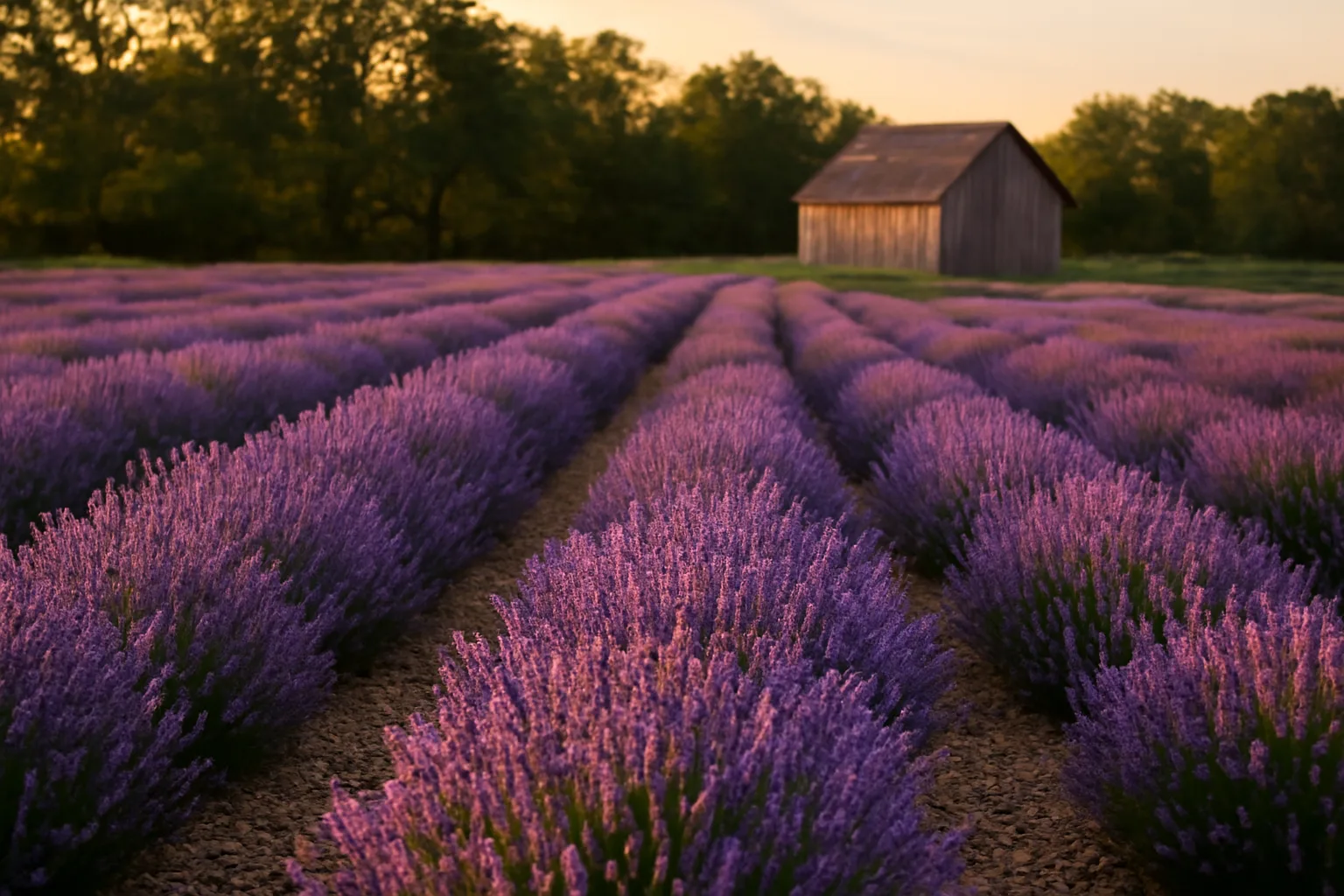
Plan on three seasons before a lavender farm in Indiana looks like the photos. Year one is establishment. Year two is a light cut. Year three is the first harvest you can honestly sell.
That three-year ramp is the standard extension story, not an Indiana quirk. UK’s crop profile and the ATTRA lavender publication both treat full production as a year-three event. [3][9]
Business paper is faster. An LLC and a retail merchant certificate can be done in days to a couple of weeks if your filing is clean. I will not quote a processing time. Those change. Confirm with INBiz and DOR. [7]
DNR nursery licensing follows their inspection calendar. Confirm with the division. No approval promise belongs in a planning article. [5]
Field time follows frost. Most of Indiana plants after late April or mid May. Flowering on established English lavender usually hits June. First-year plants should not be stripped. You are building roots and wood.
If you want a public u-pick weekend, I would not advertise one until year three. A quiet year-two cut for friends is fine if the stand is thick. Dead plants in a u-pick row teach the wrong lesson.
Buying land, drilling a well, running power, and putting up a barn is a one to two year construction story on top of the crop clock. Keep those clocks separate in your head.
Order plants in winter. Get soil tests back before you lay drip. File the entity before you take a card payment. The crop will still make you wait.
What does land cost for a lavender farm in Indiana?
Purdue’s 2023 farmland survey put average-quality Indiana bare farmland at $12,408 per acre. [2]
That sentence is the one lenders still repeat. Top ground cleared $14,826. Poor ground was $9,351. USDA’s national 2024 farm real estate average was $4,170 an acre, so you are paying Midwest row-crop prices for a specialty crop that hates wet feet. [1]
"Farm real estate refers to all land and buildings on farms." That is USDA’s definition in the Land Values Summary, which means the state average is pulled up by houses and bins you may not need. [1]
Lavender wants slope, gravel, or at least internal drainage. A lot of expensive Indiana Corn Belt ground is tile-drained silt loam that still sits wet in April. High price corn ground is often a bad lavender site. I would rather have a cheaper ridge than a $14,000 flat.
Pull the parcel on NRCS Web Soil Survey and look at drainage class, flooding, and depth to water table before you fall in love with a listing. [11] If the map says somewhat poorly drained and you cannot see a fall across the field, walk away.
Compare that land bill with lavender farm cost in California or a cheaper southern start like lavender farm cost in Alabama if you are still choosing a state.
How much do plants, beds, and irrigation cost per acre?
Plants plus a water system are the first real checks after land.
Spacing drives the plant bill. Tight bunching rows can push past 3,000 plants an acre. Wider oil rows sit closer to 2,000. UK’s profile is the honest public worksheet for populations and the slow ramp to yield. [3] ATTRA notes that plant density swings hard with the product you want, whether that is fresh bunches, dried material, oil, or plants for sale. [9]
Use $2 to $4 a plant delivered as a planning band, then get three quotes. Freight on live plants is rude. Cheap unlabeled "purple mix" is how you learn a tender cultivar the hard way.
Indiana rain does not replace drip. You need to control the root zone in July without soaking crowns in March. A simple drip reel, filter, and layflat for two acres often lands in the low thousands if you already have a well. A new well is a different conversation. I have seen people waste money on orchard microsprinklers. Overhead keeps the canopy wet. Do not do that.
Mulch. Light-colored gravel or very coarse chips. Black plastic can cook plants and then fail. Budget a few hundred to a couple thousand an acre.
Raised beds or at least hilled rows. In central and northern Indiana this is the difference between a field and a compost pile. MSU’s Midwest lavender notes keep coming back to wet soils and winter injury, which is the same problem you have here. [13]
I would plant a quarter acre trial before I bought 8,000 plugs. That is the cheapest insurance on this whole list.
What do buildings, a still, and u-pick setup actually cost?
A barn is nice. It is not required in year one.
You need a dry place for bunches, a table, and maybe a small still later. A used cargo container or a corner of an existing shed works. A new pole barn in Indiana is a five-figure to low six-figure decision once you add slab and electric. That can wait.
Stills. A small copper or stainless essential-oil still can be a few thousand dollars used or well into five figures new. I would not buy one until I have biomass. Year-one plants should not be distilled anyway. If you ever make beverage alcohol (a gin, a liqueur), you leave farm retail and enter federal alcohol law. Straight steam-distilled lavender oil is not that. Do not confuse the two.
U-pick. Gravel parking, a portable toilet, shade, a card reader, scissors, and a waiver clipboard. A few thousand if you stay humble. A shop and a paved lot are how weekends start costing more than the flowers.
Insurance. Farm liability with an agritourism rider. Get quotes. I will not invent a premium.
If you like paper in one binder, LavenderKit publishes a $149 Cultivar + Distill + U-Pick Kit with the planning path at /start. This article is useful without it.
Cold-climate builds look different. Peek at lavender farm cost in Alaska or lavender farm cost in Colorado if winter structures are your main fear. Indiana winters are real. They are not those winters.
Which Indiana taxes and registrations actually apply?
Treat this as a stack, not one permit.
Entity. Optional, but I would form an LLC on INBiz if visitors will walk your ground. Confirm forms and fees on the current portal. [7]
Retail merchant certificate. Required for most retail sales. Collect Indiana sales tax on taxable items. Many food items and some ag products have special rules. Confirm the taxability of fresh cut flowers, dried bunches, plants, and oil with DOR. Do not guess. [7]
Federal. An EIN from IRS if you have an entity or employees. Farm income and expenses go on Schedule F if you are actually farming for profit. IRS Publication 225 is the farmer’s tax guide. Hobby loss rules are how the IRS treats pretty fields that never try to make money. [14]
FSA farm number. Free. Useful if you ever want USDA programs. Get one at the county FSA office.
Property tax. Indiana assesses agricultural land on a soil-productivity system. A gift shop, frequent events, or a parking lot can look commercial to a county assessor. Ask before you change use. I am not your assessor.
Payroll. If you hire August harvest help, you are an employer. Confirm current wage law and workers’ comp with a licensed agent. I will not invent a rate.
No approval timelines here on purpose. Boards change their queues. Confirm every current fee with the board that issues the paper.
Can you actually grow lavender in Indiana?
Yes, if you pick English types and keep their feet dry. No, if you plant tender French or Spanish lavender and set them in a flat clay lot.
The USDA Plant Hardiness Map puts most of Indiana in zones 5b through 6b, with a little 7a in the south. [8] Lavandula angustifolia is the hardy species. Lavandin (L. x intermedia) can work on good sites. Stoechas and dentata types are gift-shop plants, not field plants here.
Penn State’s lavender production page is blunt about drainage and full sun, and that advice travels. [10] MSU writes about Midwest winter kill and snow mold. [13] Same latitude band as northern Indiana.
Rainfall here is the enemy more than cold. Most of the state gets a lot of spring moisture when crowns rot. Raised beds, gravel mulch, air flow, and no irrigation in March.
I would plant Hidcote, Munstead, Phenomenal, or another variety with a Midwest track record, in a small block, and see what January does. Variety trials on your soil beat a catalog. Deer sometimes browse. A dog and a short fence beat a $15,000 deer fence on two acres.
Southern humidity states have a different rot problem. Lavender farm cost in Florida is not your climate twin. Idaho’s dry air is closer to what lavender wants. lavender farm cost in Idaho
What first-year cash should you keep in reserve?
Keep a year of operating cash after the plants are in the ground. Not optional.
Dead plants, a pump failure, a late freeze after you advertised a bloom weekend, and insurance are the usual hits. Because year one has almost no product, every dollar is outbound.
A sane reserve on a 1 to 2 acre start is $8,000 to $20,000 on top of establishment, more if you have a land payment. If that number makes you flinch, rent ground and plant a quarter acre.
I would skip the still, skip the shop fit-out, skip custom labels for 5,000 bottles, and skip hiring a marketing firm. Those are year-four purchases.
What I would spend. Soil test. Web Soil Survey printout. A soil probe. Better plants from a nursery that will tell you the cultivar. Drip. Gravel. Liability insurance before the first guest.
Paper. Entity, retail merchant, DNR license if you sell plants, a simple bookkeeping file, and a farm number. That stack costs little next to plugs.
Is buying or renting smarter for a first lavender farm?
Rent. Unless you already wanted the farm for other reasons.
Three years of cash rent on two acres of ordinary ground is still less than the closing costs on a purchase at Purdue’s average-quality price. [2] You also get an exit if the cultivar dies or you hate weekends with strangers in your driveway.
Buy if the parcel is a uniquely dry ridge, you will live there, or you need buildings that a landlord will not let you add. Do not buy 40 acres of $12,000 corn ground and then plant two acres of lavender. That is a land speculation with a hobby on top.
A written lease should say you can install drip and raised beds, and who owns those improvements when you leave. Get the well access in writing. Get a harvest-season access clause so a landlord cannot block parking in June.
If the landlord wants a share of u-pick revenue, run the numbers with a pencil. A high percentage on a year-three crop can cost more than rent.
What would I skip on a two-acre Indiana start?
I would skip imported tender cultivars. I would skip a new barn and a large still. Paved parking and a wedding program in year one can wait too.
Weddings and large events pull zoning, restrooms, alcohol rules, and insurance into a different sport. Bloom is short in Indiana. You get a few good weekends in June. A business that needs a 12-month tourist flow does not match a June crop.
I would also skip organic certification in year one unless you already have certified ground. NOP certification has its own paper and fees. You can grow cleanly without the seal while you learn.
What I would do. One hardy cultivar in enough volume to look like a field. Drip. Raised rows. A simple u-pick in year three. Dried bunches and a small oil run once you have biomass. Wholesale stems to a couple of florists if quality is there.
Compare your capital plan with other state writeups if you are still mobile. Starts in Alabama and Idaho do not share Indiana’s land basis.
How do Indiana lavender farm costs compare with other states?
Indiana’s bill is land-heavy and climate-manageable.
You pay Corn Belt prices for ground. [1][2] You do not pay Pacific land prices. You do not pay Alaska freight. You do fight spring wet and a short bloom window.
A California coastal start can dwarf your land line. See lavender farm cost in California. An Alabama start often has cheaper land and a longer season, with more humidity disease. lavender farm cost in Alabama Colorado adds altitude and irrigation reality. lavender farm cost in Colorado
Licenses are not the expensive part in Indiana. DNR nursery paper and a DOR retail merchant certificate are cheap next to 3,000 plugs. The expensive part is buying average farmland and then waiting three years. [3][5][7]
If I were moving for the crop alone, I would not pick Indiana for cheap land or for arid air. I would pick it because I already live here, I already have a drained ridge, or I want a June u-pick within a drive of Indianapolis, Fort Wayne, or Louisville.
LavenderKit is an independent publisher, not a law firm and not a service company. Use /start only if you want that optional kit. Confirm every fee and form with the board that issues it.
Frequently asked questions
Do you need a license for a lavender farm in Indiana?
Growing lavender as a crop does not take a special farm license. Selling live plants requires an Indiana DNR nursery grower or dealer license under IC 14-24. Retail sales need a Department of Revenue retail merchant certificate. Food products can trigger county health or home-based vendor rules. Confirm current forms and fees with each board. Zoning is a county question.
How much does a lavender farm cost in Indiana?
If you already own drained land, a 1 to 2 acre start often costs $20,000 to $50,000 for plants, drip, beds, and simple public access. Buying average farmland adds roughly $12,000 an acre on Purdue’s 2023 survey. A full build with barn, still, and parking can pass $150,000. Nobody publishes a clean Indiana lavender budget. Confirm land with the current Purdue PAER table.
How long does a lavender farm take in Indiana?
Field production takes about three years. Year one establishes plants. Year two gives a light harvest. Year three is the first full cut. Business filings can take days to weeks, and I will not promise a set number. DNR nursery licensing follows the division’s inspection schedule. Confirm processing with INBiz, DOR, and DNR. Do not advertise a big u-pick until the stand is actually thick.
How many lavender plants fit on one Indiana acre?
Most bunching layouts use about 2,000 to 4,000 plants per acre. Tighter spacing raises the plant bill and the disease pressure. Wider rows suit oil and equipment. The University of Kentucky lavender profile is the public worksheet I would start from, then adjust for your beds and tractor width.
Can lavender survive an Indiana winter?
English lavender (Lavandula angustifolia) and some lavandins can, on well-drained sites in zones 5b to 6b. Tender French and Spanish types usually do not. Wet crowns kill more plants than cold here. Raised beds, gravel mulch, and hardy cultivars matter more than row cover. Plant a small trial first.
Do I collect sales tax on bunches and oil?
Often yes on retail bunches, plants, and bottled oil, but taxability has product-specific rules. Get a retail merchant certificate and ask DOR about each SKU. Do not copy another farm’s tax setup. Confirm in writing. Wholesale to a reseller can be different if you take a valid exemption certificate.
Do I need a permit for a lavender still in Indiana?
Steam-distilling lavender into essential oil is not the same as making beverage alcohol. A federal distilled spirits permit is about drinkable alcohol, not a kitchen still for oil. If you later make gin or a liqueur, stop and get federal and state alcohol counsel. Confirm any local fire or zoning rules for a fuel-fired still.
Is u-pick allowed on agricultural land in Indiana?
Often, but the county decides. Crop production is usually fine in ag zoning. Parking, signs, a shop, and frequent events can trigger a special exception or a commercial read from the assessor. Call planning and the assessor before you advertise. Post the IC 34-31-9 warning if you want that limited shield, and still buy insurance.
What soil does lavender need in Indiana?
Sharp drainage and full sun. pH near neutral to slightly alkaline helps. Heavy, flat, poorly drained silt loams are a poor bet even if they sell corn well. Check the parcel on NRCS Web Soil Survey for drainage class and water table. Raised beds and gravel save more plants than fertilizer.
Should I buy or rent land for a first lavender farm?
Rent unless you already wanted the farm. Three years of cash rent on two acres is usually cheaper than closing costs at Purdue-level land prices. Buy a dry ridge you will live on. Do not buy 40 acres of $12,000 corn ground for a 2 acre flower crop.
Does a lavender farm get agricultural property tax rates?
Maybe, if the county still sees it as agricultural use. Indiana agricultural land follows a soil-productivity assessment. A shop, events, or a parking lot can look commercial. This is a county assessor call, not a slogan. Ask before you change the use. I am not your assessor and I will not promise a rate.
Can I sell lavender cookies from my farm kitchen?
Only if you fit Indiana’s home-based vendor rules or a licensed kitchen. The state health department publishes the HBV limits. Many products fall outside them. County health departments still matter. Read the current ISDH page, then call the county. Do not invent a cottage-food story from another state.
How much does drip irrigation cost per acre in Indiana?
A simple drip system on one to two acres often lands in the low thousands if you already have a well and a pump. A new well, filtration for dirty ponds, or a full automation package costs more. Overhead sprinklers are a waste on lavender. They keep crowns wet. Get two local irrigation quotes.
Sources
- USDA NASS Land Values 2024 Summary: U.S. average farm real estate value was $4,170 per acre in 2024; farm real estate means all land and buildings on farms
- University of Kentucky Center for Crop Diversification, Lavender profile: Public lavender production profile covering plant populations and year-three full production
- Indiana Code 14-24-5 Nurseries: Indiana nursery growers and dealers are regulated under IC 14-24 through DNR’s division
- Indiana Code 34-31-9 Agritourism activities: Limited agritourism liability shield if the statutory warning is posted
- USDA Agricultural Research Service Plant Hardiness Zone Map: Most of Indiana falls in USDA hardiness zones 5b through 6b
- ATTRA/NCAT, Lavender Production, Products, Markets, and Entertainment Farms: Lavender plant density and markets vary by product, with full production treated as a multi-year ramp
- USDA NRCS Web Soil Survey: Official tool for checking a parcel’s drainage class, flooding, and water table before planting
- Michigan State University Extension, Growing lavender in Michigan: Midwest lavender fails most often from wet soils and winter injury, not from lack of summer heat
- IRS Publication 225, Farmer’s Tax Guide: Farm profit-or-loss reporting and related federal farm tax rules for Schedule F filers